Categories
Leadership

The perfect end to a year? Life Retreat.

Hopefully you are sliding into holiday mode and the most troublesome thing on your mind is nailing the ratio of rosemary:thyme:garlic for the prime rib. Me too.

Today I’m deviating from our normal topics to share one of my favorite end of the year traditions: a Life Retreat. It’s one of the highest life ROI ways to invest a few days, carving out time to step away from daily life to distill my learnings from the year ending and gear up for the year ahead. It’s my best chance to recalibrate day to day life with long term objectives, to pressure test the trajectory I’m on with the trajectory I want to be on.

In my experience, the real keys to crafting a high impact Life Retreat are:

  • take 2-3 days – any thing less doesn’t allow you to completely separate from day to day life
  • a relaxing setting, for me it’s a mountain range somewhere
  • really good food + abundant charcuterie
  • a comfortable house with a good view from the porch (3 cheers for AirBnb)
  • the perfect mix of hiking to clear the mind & reflect, and down time to journal or whiteboard or whatever seems like the best way to mind map
  • identify in advance the big questions/topics you want to mentally wrestle down

Earlier this month I went on my 2020 Life Retreat so I thought I’d share 5 of my big learnings from this year:

  1. Play long term games with long term people. Build relationships like they are the only thing that matters. Because they are the only thing that matters.
  2. Hit send.Put the idea in the world. Let publishing be a forcing function for action, whether publishing means hitting send on a newsletter, a tweet, or an email to a target customer. Even when you’re a little nervous to do so, or, maybe especially when you’re a little nervous to do so.
  3. Process disciplineI can’t control outcomes. I can, however, control the design and execution of my process. Am I executing on the things that increase the probability of the outcomes I want to see? Am I doing it consistently? Am I refining the process as I go?
  4. Curiosity & humility are pre-requisites for making an impact. In early stage ventures / new products, curiosity is what leads to uncovering what others missed. And humility is what lets people successfully follow where their curiosity leads, whether by asking that critical question or updating an outdated mental model.
  5. I am responsible for what I focus on. 2020 usually felt like the whole world was burning down, but look at history….when isn’t that the case? I deactivated my Facebook account and disabled push notifications for news but still had to daily & actively manage how much 2020-ness I fed my mind. Regardless of the crazy happening out in the world, I have to stay focused on what matters to me and my work. This lesson was poignant in 2020.

It’s been a doozy of a year for everyone, including those in the meat & livestock industry, from growers navigating volatile markets to processors navigating the overnight loss of the entire foodservice channel, and every other extreme that 2020 indiscriminately served up, including human loss.

But now is a time to celebrate every inch of progress made this year….especially this year. Maybe the biggest industry win this year was that despite the calls for a “more resilient food supply chain”, I think we saw that the food supply chain *IS* resilient. Plenty of room for improvement? Always. But the system held. And yet, the chaos created by COVID-19 will definitively shape the industry for decades to come, whether it’s the acceleration of remote work, digitization of supply chains, the drive towards de-commoditization, or any of the others we could list.

Here’s to capturing every single personal and professional learning that this year served up and heading into 2021 ready to win. I hope you have a great holiday season!

Janette

Processing…
Success! You're on the list.

Categories
Animal AgTech

As the sun sets on 2020…

As the sun sets on 2020, two juxtaposed themes to note:

  1. This once-in-a-generation massively disruptive & wildly uncertain thing began crashing down on us in March and one of the first things consumers did was fill their freezers with meat, as evidenced by empty retail meat cases in the spring or by the fact that custom processing plants across the country are booked solid through the end of 2021. I’m convinced nothing reveals our values more than peak anxiety purchasing habits.
  2. In the first seven months of 2020, nearly $1.5 billion was invested into plant and cell based meat alternative startups.

What does these 2 seemingly unrelated things tell us? That livestock & poultry producers have an end product that is in demand, that is important, even necessary. And yet, investors and innovators are betting that won’t be the case forever. This juxtaposition should give industry leaders an innovate-and-improve urgency that far surpasses that of the burn-it-down crowd.

This also leads me to believe more than ever in The Impossible Foods play the meat industry should run.

With that, here are the 5 most popular Prime Future topics in 2020:

(1) Tyson’s Moonshot: what the new CEO’s resume really tells us about the future of Tyson Foods

What a company says about their future is mildly interesting, the tell is in who they hire. And the largest meat company in the world just hired an automation tech project manager as their next CEO. Which can only mean 1 thing: Tyson is betting the farm on its future as a tech company. (read the link above for more analysis on how this could shape up)

(2) When does Amazon jump in (to meat & livestock)?

Retailers are moving upstream. Who and what comes next? Amazon (Whole Foods) acquiring Bell & Evans? Kroger building their own pork plant? Whole Foods and <cattle genetics co of choice> teaming up to expand the Country Natural beef supply chain? Albertson’s buying a feedyard? This upstream expansion plays out amid the simultaneous trend of retailers expanding their footprint closer to the customer through grocery delivery and digital offerings.

The primary attribute of coordinated supply chains is incentive alignment from first player to final player; coordinated supply chains are strategic, long term, and oriented to increase value for all players by focusing on the deliverable to the end customer. Coordinated supply chains are asset light, data capture heavy. So, when does a coordinated supply chain make sense?

(3) Can gut bacteria save livestock & poultry? Yes and here’s why.

In an industry accustomed to FDA regulated products brought to market with impeccable rigor by pharma co’s, most microbiome products have been viewed by producers as foo-food dust….rightfully so. Truly, its been the wild west out there with microbiome products. This has damaged the category’s brand with livestock & poultry producers while raising the skepticism hurdle for future products.

And yet, I’m optimistic the category’s wild west era will soon end. Why?

(4) Meat eaters don’t care about genetics, could they?

This “no one downstream from the farmer cares about the genetics source” is s a story that plays out similarly across all segments of ag. Genetics sources have historically been a behind the scenes layer in food production, completely removed from downstream value chain players and the consumer’s sphere of interest or concern.

But, that may be changing in meat & poultry…

(5) Telus Agriculture marks Animal AgTech 2.0

The announcement of Telus Agriculture marks Animal AgTech 2.0 for two reasons:

  1. This is a non-traditional entrant moving into the ag industry in a big way via the tech door.
  2. This approach is an example of rolling single point solutions into a platform to drive broader outcomes for customers than the individual value of any single offering.

In the journey to market maturity, it’s time for the Livestock Tech market to converge into more platform based approaches. Why?

I’m so glad you’ve joined the Prime Future journey. Your comments, questions & counterpoints are the best part.

Happy New Year,

Janette

Processing…
Success! You're on the list.
Categories
Uncategorized

The Meat Cartel’s Moat

The whiplash inducing effects of the pandemic highlighted the bottleneck in the meat value chain that sends economic ripples from ranches to food retailers: primary processing.

This has raised the question in many circles, how does the industry create more distributed processing capacity?

Before we dig into the complexity around that question, let’s start with the obvious: meat processing is a volume business. The fixed costs associated with building and operating a plant are high, so the more salable pounds that leave the plant, the lower the fixed costs per pound. The pursuit of lowering cost/lb has led to 2 related but distinct dynamics:

  1. Consolidation among companies who own processing capacity, e.g. 85% of beef processing capacity owned by 4 companies, 63% of pork processing capacity owned by 3 companies.
  2. Concentration of capacity, e.g. individual plants are getting larger so an individual plant can represent a meaningful % of total industry capacity, as evidenced by the market swings after the loss of 6% of total beef processing capacity from the Tyson Holcomb plant fire.

Consolidation is the natural economic end game in a mature market, and concentration (scale) is the natural end game in a high fixed cost, commodity business. It is what it is. Normally the system functions efficiently and effectively. Yet in 2020 as plants shut down due to pandemic driven labor shortages, producers were left with nowhere to send market ready animals. The backlog of live animals drove livestock prices down while the shortage of meat drove meat prices up. The problem was that producers had few to no other options.

So, how do we increase processing optionality for producers? What does a more distributed processing industry in the US look like? If the US had more distributed processing capacity, it seems it could not only increase optionality for producers but also for food companies who buy meat, and for more programs/brands, aka more options for value creation from differentiation.

So if the benefits are obvious, why isn’t there more processing capacity outside the large plants / large packers? Why aren’t companies rushing out to build new plants or restart idle plants? Some traps to note…

  • If you want to build a new plant, it requires a huge upfront capital investment.
  • If you want to buy an old plant and upgrade it, it’s either a huge investment to upgrade or older equipment means subpar operations and high costs.
  • Processors make money when they sell the entire carcass, not just the middle meats. Anybody can find a buyer for ribs, but establishing a sales machine and programs to consistently sell the entire carcass is a huge challenge…one that’s been underestimated by almost every producer co-op that bought a plant thinking it can’t be that hard to make those sweet sweet packer profits.
  • Regulatory hurdles.
  • It’s a labor intensive business so access to labor is paramount.
  • Because of all the above plus the volatility of profits in a commodity market, Private Equity tends to prefer higher margin, more predictable businesses in further processing so access to capital (or finding the right capital) can be an issue for upstarts in primary processing.

Before we go further, let’s also anchor in the 3 types of beef processing plants in the US:

  1. Local custom plants processing <50 head/day
  2. Regional plants processing 500-2,000 head/day, e.g. One World Beef or the Missouri Prime Beef Packers new plant soon to open
  3. The Big Plants processing 4,000+ head/day

Though, of course, category 3 is and will be the high volume category, there’s a place for all 3 types in the grand scheme. But how realistic are the hopes of those wanting to see significant expansion of categories 1 & 2?

Custom processing plants had been on a steady decline for years until March 2020 when demand skyrocketed as consumers turned to local cattle producers to fill their freezers with meat. By the summer, most custom processors had no available processing slots through the end of 2021. Is that level of demand sustainable? I’ve heard a lot of people talk about building new small plants, I’ve seen very few take action. It makes me wonder if there isn’t a private equity play to purchase multiple small plants and roll them up into something with a more strategic marketing approach. A robust custom processing ecosystem is a pre-requisite for a robust direct sales ecosystem for producers.

When you think about regional plants, there’s a reason these plants change ownership every 4-6 years as the beef cycle fluctuates and the challenges of operating a beef plant profitably settle in. The thing about regional plants is they simply cannot compete with the big plants on cost, so they have to win on marketing & sales strategy. Creekstone or Caviness are good examples of making this model work. This is where I see opportunity. Cue all the aligned/coordinated/virtually integrated supply chains. A robust regional processing ecosystem is a pre-requisite for a robust aligned supply chain ecosystem.

A marginal option that has been talked about for a long time but has little traction in the US is mobile processing. I’ve heard this is much more common in Australia. The logistics and regulatory challenges seem to be the hurdles to overcome.

Processing is a topic that we kind of avoid talking about with customers/consumers because really, it’s not a fun topic for normal people. Normal people aren’t captivated by the glistening stainless steel of a truly pristine facility, unlike us industry weirdos. And yet, why can’t the how’s & what’s & why’s of processing become a differentiation point?  If marketers have convinced consumers to care about what feed ingredients are in the diet, why aren’t brands capitalizing on the idea of such and such claim about how the animal was harvested? Not to mention, as automation is increasingly incorporated into large plants, doesn’t that create an increasing opening for positioning around the contrast? Weirdly, butchering has become a kind of bougie skill among tech bros and the like. That seems like a trend someone could capitalize on.

So we wind up where we began, that there’s no easy answer to this topic or a single obvious solution. Producers need more options, but the seemingly indestructible moat the big packers have is that processing is a high volume business which is why the industry structure today is what it is. And despite the chicken or the egg dynamic here, I’m bullish that as more non-traditional supply chains pop up, these supply chains will create sufficient business cases to drive new investment in processing optionality.

Questions:

  • What are interesting business models for processing in other countries?
  • What interesting trends do you see in this space?

(Side note: once again, this conversation pertains mostly to the beef industry, somewhat to pork. Because of vertical integration, this isn’t relevant for poultry. It’s just a lot more fun to think about beef and pork because the fragmented industry structure creates so many more opportunities for interesting business models. Although upstarts like Shenandoah Valley Organic and Cooks Ventures are proving there could be alternative models in poultry.)

Processing…
Success! You're on the list.
Categories
Animal AgTech D2C Funding

Can grass fed beef scale in the USA? ButcherBox CEO & founder, Mike Salguero, paints a vision for it.


I am thrilled to share a conversation with Mike Salguero, founder & CEO of ButcherBox. If you’ve read Prime Future for more than a minute, you know I’m bullish on business models that leverage tech and reorganize supply chains in ways that create more value for producers (on one end) and consumers (the other end).

Enter ButcherBox.

ButcherBox was started in 2015 to “ship meat in the mail” with a focus on meat with claims that vary by protein. In the beef category, the company intended to sell grass fed beef which meant sourcing from Australia/New Zealand. But as their business matures, ButcherBox is looking to source grass fed beef in the US…a segment that does not currently exist at scale. There are several oft quoted “reasons this won’t work” that have to be eliminated in order for the US to develop a robust grass fed segment from genetics to pasture management to processing. It will take creativity, technology, incentive alignment, and a lot of time in front of the white board to figure out grass fed beef in the US but where there’s a market, there’s a way.

Mike is a tech entrepreneur turned meat industry believer who is building a brand for the long haul, as in 100-year-time-horizon. This is all the more interesting given Mike’s surprise when he started exploring the meat category that there (really) are no brands in meat, especially as retailers have dialed up private label offerings. But one segment’s miss is another segment’s opportunity, and here we are seeing how business model innovation can create value. Delicious.

I hope you enjoy Mike’s insights as much as I did. A few time points in time to highlight:

  • 7:30 minutes – Why the only early outside capital into ButcherBox was via a Kickstarter campaign, instead of the traditional venture capital model.
  • 14 minutes – Mike talks about some of the messy early challenges of getting ButcherBox off the ground.
  • 24 minutes – The 2 reasons ButcherBox customers are customers? Mike says its split between convenience (easy order, get a box the next day) and access (to meat with specific claims).
  • 31 minutes – Mike talks about the future of ButcherBox which has implications for retail (how consumers purchase meat) and livestock/meat value chain as they look at how to source grass fed beef, at scale, in the US.

Processing…
Success! You're on the list.

Categories
Animal AgTech

Fintech + livestock: where’s the opportunity?


Perhaps the most notable innovation in the history of US ag industry financing was the creation of the Farm Credit system, with roots reaching back to legislation signed by President Woodrow Wilson in 1916 to create the Federal Land Bank System to provide low interest credit to farmers.

Fast forward to the current macro trend of financial tech products, aka Fintech. Much like using tech to enable or reorganize supply chains in faster/better/cheaper ways, the idea behind Fintech solutions is faster/better/cheaper financial services. Most of us have multiple consumer facing Fintech products in our personal finance stack. Consumer facing examples range from peer to peer payment services like Venmo to online only banks like Chime to trading apps like Robinhood for beginning investors (Tesla ain’t mad about it).

Last year a16z, the venture firm, hypothesized that every company will eventually be a fintech company:

“In the not-too-distant future, I believe nearly every company will derive a significant portion of its revenue from financial services. Startups will be able to launch companies faster and more cheaply. Existing financial services institutions will be able to introduce new products quickly—and spend less on IT maintenance. And most importantly, this means more choices, better products, and lower prices for consumers.”

Sounds good for a consumer context but perhaps a little far fetched for a B2B context in an industry who’s primary access to credit stems from a 105 year old system, right?

Maybe…but maybe not.

Before we look at some ideas for fintech in livestock & meat, let’s apply generous boundaries to the category and look at some fintech innovations across agriculture:

  • Grower’s Edge offers risk management products for early adopters of unproven inputs.
  • Tillable is a platform for landowners to manage farm land leasing.
  • Farmland Finder is streamlining the process for farmland buyers and sellers.
  • AcreTrader & FarmTogether offer vehicles for investing in farmland.
  • Harvest Returns is a crowdfunding platform dedicated to ag investments, both debt & equity financing for farmers and agbusinesses.
  • Genesis Feed Technologies is bringing a precision element to managing feed costs/outcomes by allowing buyers to value soybeans based on nutrient value instead of protein content alone.
  • Stable is a risk management platform for untraded commodity market risk, targeting food manufacturers.
  • Produce Pay “finds, finances, and fulfills grower supply for importers of fresh produce – a partner to growers from first planting to final liquidation.”

(Side note: one space that’s only seen a few startups is crop insurance, and even those startups haven’t lasted long before closing or pivoting. One of my favorite consumer examples of insurtech is Lemonade, the recently IPO’d company offering renter & home owner’s insurance targeting millenials and built around improving the customer experience with AI/ML and digital first. It’s hard to replicate that type of model in crop insurance given that the program is backed by the federal government, but it still seems like there are innovation opportunities.)

Where are the fintech opportunities in livestock & meat?

So as we think about where we might see financial services innovation, here are a few questions that can point us in the right direction:

  • Who needs access to capital? More? Cheaper? Nontraditional terms?
  • Who’s taking unnecessary risk?
  • Who’s playing in an inefficient or opaque market?
  • What existing financial services offer perfectly fine products but abysmal customer experience?
  • What existing financial services are cost prohibitive to large segments of would be customers?

Based on those questions, here are some ideas in animal ag:

  1. As more feedyards transition to custom feeding rather than owned cattle, could Fintech products allow retail investors to buy cattle for custom feeding?
  2. Robinhood for traded or untraded commodity markets? <ducks as market players throw shoes at the idea of adding even more volatility in markets>
  3. Rethinking how hog or poultry houses are financed. Is there a way to give increased financial flexibility to a producer taking out a $300k loan on an asset that has only 1 high value use? The real risk is asset specificity, which perhaps can’t be eliminated but can it be offset. Ask the contract poultry grower who’s contract has been terminated because the only processing plant in a 200 mile radius has closed down. You can’t solve the asset specificity problem with Fintech, but what if there were ways to increase financing flexibility? What if hog and poultry houses were an asset class open to outside investors?
  4. Mike Salguero, ButcherBox CEO, recently highlighted the financing challenges as a limiting factor to establishing a robust grass fed cattle feeding sector in the US. Since most operating loans are on a 10-12 month terms, until it takes grass fed cattle the same amount of time to finish as grain fed cattle, existing financing vehicles are insufficient. More broadly than that use case, what new financing options could give producers greater than a 12 month horizon to take different risks than traditional banks enable?
  5. What about how animal health/nutrition products are purchased and distributed to producers? What’s the Amazon-adapted-to-this-industry-and-B2B model look like, and the related financial services that naturally grow out of that model?
  6. Aligning poultry contract grower pay, both the incentives & structure as well as paymenting, with overall poultry complex objectives. For example, if a plant is selling cuts from small birds to a KFC type customer that needs extremely high uniformity, how can improved data flows be used to drive and align incentives among growers, live production, and the processing plant?
  7. And alas, the oh so vexing challenge of price discovery across the negotiated portion of markets from live cattle to pork and poultry. (Go to the google if you need current context here.)
  8. Do food companies building aligned supply chains become the financing arm for producers in their systems?

I readily admit that perhaps the above list is simply a hammer in search of a nail, at least for the North American livestock industry. But in 2121, will the Farm Credit system still be the best innovation in US ag financing history? I’m betting the answer is no.

A bigger opportunity….India?

Regardless of what emerges in the US, the opportunity for fintech is exponentially more interesting in regions of the world where supply chains are extremely fragmented, hurdles to accessing capital are higher, etc. Take India for example. Mark Kahn of Omnivore, an agtech venture fund in India, described it this way:

In India there are 80 million dairy farmers and 300 million head of cattle and negligible penetration of institutional credit and insurance across the ecosystem. FinTech in livestock represents a huge opportunity which is why our portfolio includes 3 companies in the space:

  • Animall – a mobile direct to farmer platform for dairy & cattle trading
  • Stellapps – B2B software for large co-ops and dairies, starting at the point of purchase where the institutional buyer buys milk, embedding FinTech into milk procurement processes
  • Gramcover – startup offering insurance across rural India, including crop insurance and now for livestock

It’s not hard to imagine the impact of fintech on India’s agriculture industry, if these companies can effectively scale.

Your turn. Across any geography or segment of livestock/poultry/meat, where do you see a need for improved financial services? Where is there unnecessary friction in financial transactions? What financial services innovations from other industries could be applied in this market?

Processing…
Success! You're on the list.


Categories
Animal AgTech Animal Health

Can gut bacteria save livestock & poultry? Yes. Here’s why:

Here’s the thing: I’m bullish all things microbiome. Soil. Plant. Animal gut. Human gut.

Pressure to reduce antibiotic use has led to the launch of more companies bringing non-antibiotic pre/pro/post-biotics to the market to “support gut health”.

The obvious reason is that producers simply have to figure out how to offset lost performance from reduced antibiotic use. Look at the US poultry industry that has gone from <10% No Antibiotic Ever production to ~60% NAE….in less than 5 years. Presumably swine and cattle will follow at some point and to some degree, though that is tbd.

But in an industry accustomed to FDA regulated products brought to market with impeccable rigor by pharma co’s, most microbiome products have been viewed by producers as foo-food dust….rightfully so. Here’s why:

  1. The approval process to launch a non-antibiotic product means the manufacturer can make no claims about impacts on animal health. What’s the benefit to the animal? Sorry, we can’t say…but it helps, trust us.
  2. Microbiome products typically brought to market with limited data, either in # of studies or # of head per study. So you did 1 study with 22 birds in Italy and you want to sell to US producers? Adorable but no…
  3. Because of #2, there is limited guidance about recommended use on these products. “Here ya go producer, we recommend you use this product but good luck finding the dose that leads to the best response, most cost effectively”

Truly, its been the wild west out there with microbiome products. And it has damaged the category’s brand with livestock & poultry producers while raising the skepticism hurdle for future products.

And yet, I’m optimistic the category’s wild west era will soon end. Why?

Technology.

Look at our friends over in the crop side of the world where soil microbiome has been a fringe topic for a while, slowly making its way to the mainstream. An entire generation of technology companies are bringing precision to the soil microbiome through analytics, covering the whole range of measuring, analyzing, and ultimately enabling precision decisions to improve the soil microbiome to unlock productivity and (hopefully) profitability. Soil tech startups like Trace Genomics, Pattern Ag, and Biome Makers are proving this can be done in the world of soil microbiome.

So if we can have precision in measuring, managing, and improving the soil microbiome…..why can’t we ultimately do the same in livestock and poultry for the gut microbiome?

This would shift the entire category from product driven to outcome driven.

Instead of convincing a producer that one product is better than the next based on generic results or good branding, what if the producer could start their decision making process with baseline analysis of gut microbiome activity based on this location or these genetics, or, or, or. Then, what if the producer could monitor the microbiome through grow out to adjust their product decisions between turns, to  remove this pre-biotic and add that post-biotic or try that combo in order to hit XYZ microbiome objective because it correlates with improved feed conversion or reduced methane. And so on.

Ultimately, what’s exciting about the microbiome is not what we know….it’s how much we do not yet know. And there is a lot we don’t know. Like, for example, the interplay between the microbiome and genetics. Or environment, or diet, or any number of other factors.

Increasing the fundamental understanding of the microbiome’s baseline creates a foundation from which to build product (feed additive) decisions and then to understand the impact of those product decisions. Just like is beginning to happen in soil management.

Leveling up on the analytical understanding of the gut microbiome and how livestock producers can manage the microbiome with precision to drive performance and profitability is not only a huge opportunity, it is the only way to meaningfully reduce antibiotic use in a systematic way.

3 more questions while we’re here:

  1. We know that microbiomes are variable whether we’re talking from pasture to pasture, person to person, or pig to pig. Which obviously creates some challenges when the unit of management is 10-50,000 animals. What will precision livestock management or precision poultry nutrition look like in 10 years as we solve for this dynamic?
  2. This category is driving the convergence of animal health and animal nutrition as more companies have a microbiome element to their portfolio. What will that mean in the next 5-10 years for M&A activity and who buys or aligns with whom?
  3. With more producers looking at the benefits of grazing cattle on cover crops, what if it turns out that there’s a connection between the gut microbiome and soil microbiome? What if that gave producers 2 new levers to improve animal health & soil health? The mind reels…

I’m bullish on this space because of the potential of the unknown and the belief that through technology we can harness nature’s systems more effectively. If you are, or know, a company working to bring precision microbiome management to life, shoot me a message.

Processing…
Success! You're on the list.
Precision microbiome management is happening in soil; it’s only a matter of time until the same tech comes to the gut microbiome, shifting the livestock & poultry microbiome space from product driven to outcome driven.
Categories
Animal AgTech Funding

If Impossible Foods outsmarts the meat industry, its for this reason.

“We are going to replace animals in the food system by 2035,” said Pat Brown, founder and CEO of Impossible Foods, in late August 2019.

According to a Harvard Business School case study on plant-based meat alternatives:

“In 2016, after $80 million in research and development, Impossible Foods launched its first product: a plant-based imitation of ground beef that, compared to the real thing, generated about 89% less greenhouse gas emissions, and required 74% less water and 95% less land.

After leaving his full-time role at Stanford in 2011, Brown raised $3 million from venture capital firm Khosla Ventures to fund the hiring of a small team of researchers. Their goal was to develop a plant-based product that could be prepared, cooked, and consumed just like ground beef – and, most importantly, be so similar to the real thing that beef lovers would not know the difference; switching would not require compromise.

Unlike many plant-based products already on the market, the product would be specifically geared towards meat eaters, not vegans and vegetarians. It would compete with beef by appealing primarily to mouths and stomachs, not exclusively hearts and minds. ‘Educating and shaming and persuading is not how you get people to change diets,’ said Brown. ‘People who love meat are going to keep wanting it, so the way to eliminate the industry is to develop meat from plants that tastes better than meat from animals.’”

Brown’s strategy to replace animal protein by focusing on taste is brilliant. That strategy sparked a movement that has forced the meat industry to respond.

Multiple brands have launched hybrid products, like Perdue Farms’ popular chicken and cauliflower nuggets, and its ‘chicken-plus’ product range made in collaboration with Sacramento startup, The Better Meat Co. And Tyson, Cargill, and other processors have invested in plant and cell-based meat startups, which shows that they are hedging their business, just in case Pat Brown succeeds and alternative meats grow market share in a big way.

These are smart moves; they’re also reactive moves.

And it’s time for the meat and poultry industry to get proactive.

Brown tapped into the pipeline of venture capital to fund his company’s research and development work, but the market cap of the top 10 meat companies is over $100 billion combined. That market cap becomes even bigger when you add in the big players of adjacent spaces with a vested interest in the future of animal production, such as animal health and animal nutrition. Don’t tell me these companies can’t throw down the gauntlet to generate big innovation.

The capital exists to incentivize game-changing innovation in animal protein. Does the will?

My favorite ‘innovate the core product’ example is ultrafiltered dairy-based drink Fairlife Milk, a breakthrough product in the epitome of a commodity space, and now a growth brand for one of the largest beverage companies in the world. Owned by Coca-Cola, Fairlife didn’t just break through the milk category; they broke through in the broader beverage category.?

Another case study is the ‘discovery’ of the flat iron steak. According to The Hustle:

“In 1998, the [US] National Cattlemen’s Beef Association — the industry’ largest trade group — gave a pair of meat scientists $1.5 million in grant money and a seemingly impossible mandate: Find a new cut of meat that centuries of professional butchers had missed. Three years later, the world was introduced to the flat iron steak.”

The takeaway? Aligning resources and incentives around clear objectives delivers results.

The flat iron example brings up another potential capital source to drive protein innovation: Checkoff dollars. These dollars must be invested in programs to increase consumer demand, and to create opportunities to enhance producer profitability. Maintaining relevance and the future of the industry seems directly linked to increasing consumer demand and creating opportunities to enhance producer profitability…wouldn’t ya say?

There simply must be a way to triple down and innovate our way into a secure future for animal protein. Some questions to consider:

  • Why does animal ag keep tweaking around the edges of innovation and consumer education, instead of waging an all-out war to prove definitively the relevance and importance of animal protein to consumers, rural economies, and ecosystems?
  • Where’s the $1 billion research and development investment to innovate meat and poultry from within? To address consumer concerns about sustainability, transparency, animal well-being, and so on?
  • What would happen if meat companies created venture studios to find solutions that reduce greenhouse gas emissions in beef production by 80%?
  • What would happen if Tyson, Cargill, Perdue Farms, Pilgrim’s Pride, et al allocated venture dollars to innovation that aligns the way meat is produced, processed, and sold with changing consumer preferences?
  • What would happen if every checkoff program identified key objectives — such as improving or demonstrating animal wellbeing, or finding feed additives that maintain animal health and performance with 75% less antibiotic use — and created grants or low-interest loans to fund the work?

And perhaps most poignantly, what would happen if the meat & poultry industry took a page right out of Pat Brown’s playbook and decided to innovate their way to consumer’s wallets?

My bet is that it would pay off in a big way for processors, producers, and consumers.

Processing…
Success! You're on the list.
Categories
Genetics

Meat eaters don’t care about livestock genetics, could they?

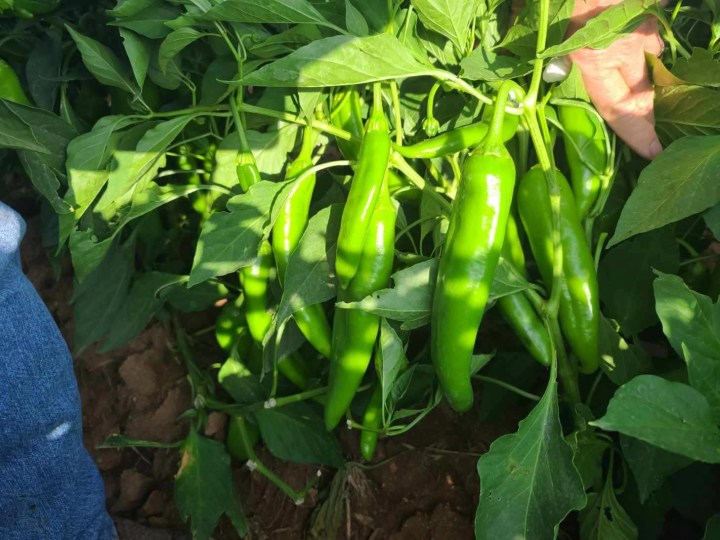
In the 1950’s my grandparents began growing green chili peppers in the high desert of southeast Arizona with its warm summer days, cool evenings, and dirt ditch irrigation.  The limiting factor for pepper market growth was the inconsistency of the heat – a consumer would get a really hot chili one meal and a mild chili the next. That lack of predictability in eating experience was problematic. So in the 1980’s my uncle began working on chili genetics and eventually isolated the heat gene to produce chili varieties with consistently predictable heat levels, whether hot or mild. 

Chances are that when you think of green chilis you think of Hatch, New Mexico. Hatch and green chilis have become synonymous. Yet Hatch green chilis are grown from, you guessed it, Arizona seed. But no one knows Curry Farms, the source of 90% of green chili pepper genetics in North America. They know Hatch as the source of all good and perfect pepper flavor. 

That’s because chili growers in New Mexico decided about 30 years ago to begin branding peppers, to highlight the region. It worked. This is the power of a marketing strategy to build a brand & differentiate even in a market where differentiation is challenging.

And this “no one downstream from the farmer cares about the genetics source” is s a story that plays out similarly across all segments of ag. 

When you buy Coca-Cola with HFCS you don’t know <or care> if that HFCS is from corn grown from DeKalb or Pioneer seed. When you buy chicken in a tray pack you don’t know <or care> whether those are Cobb or Ross genetics. When I buy Wright brand bacon, I don’t know <or care> if that pork is from Topigs or PIC genetics.

Genetics sources have historically been a behind the scenes layer in food production, completely removed from downstream value chain players and the consumer’s sphere of interest or concern.

But, that may be changing in meat & poultry.

Brands have claimed differentiation in production practices (antibiotic free, grass fed, free range, etc), processing, or even breed (Certified Angus). Two examples suggest that specific genetics may be the next branding trend:

  1. Walmart’s new supply chain, Prime Pursuits is built around 44 Farms Genetics. Not just Angus genetics, but a specific supplier of Angus genetics. Many consumers that don’t know an Angus from a Holstein know Angus because of CAB’s success. This move is Walmart’s bet that consumers who learned to care about buying Angus beef can and will learn to care about buying 44 Farms beef.
  2. Cook’s Venture, a genetics first business model. Its a D2C chicken upstart built around the company’s own Heritage breed. Whether you agree or disagree with their positioning around slow growing chickens, the premise of a value proposition marketed to consumers that highlights the genetics themselves – not the characteristics of the output of the genetics – is noteworthy.

If genetics is the next claim for branded meat, how does genetic technology fit into the equation?  There’s a lot to unpack in that question that we’ll save for another day, but here’s a glimpse at how CRISPR could play a role in scaling genetic brands:

“Otley’s team’s new approach, which they’ve been developing for six years, is to essentially turn a not-so-prize sire into a prize one by altering it genetically. Using the CRISPR-Cas9 gene-editing tool they produced mice, pigs, goats, and cattle that lack the gene NANOS2, which controls male fertility, but not female.

The result is a sterile male that produces no sperm. The team then transplanted sperm-producing stem cells from a donor animal into the sterile animal’s testes. The recipient animal then produced sperm containing only the donor’s genetic information.”

If genetics is the next claim for branded meat, what segment of the value chain is best positioned to drive? Will it be seedstock producer driven or does it have to come from downstream players already in foodservice/retail? What new alignments will this create? I’m guessing the owner of 44 Farms would never have guessed that Walmart would be a business partner yet here we are.

Yet we all know 2 data points do not make a trend and this could be an irrelevant discussion. However, the idea of branding genetics to the consumer is another example of the larger trend of coordinated  supply chains as the path to differentiation, higher margin for producers, and higher value for consumers. More on this topic next week with insights directly from the mastermind behind the new Walmart beef supply chain…

Processing…
Success! You're on the list.

Categories
Animal AgTech Funding

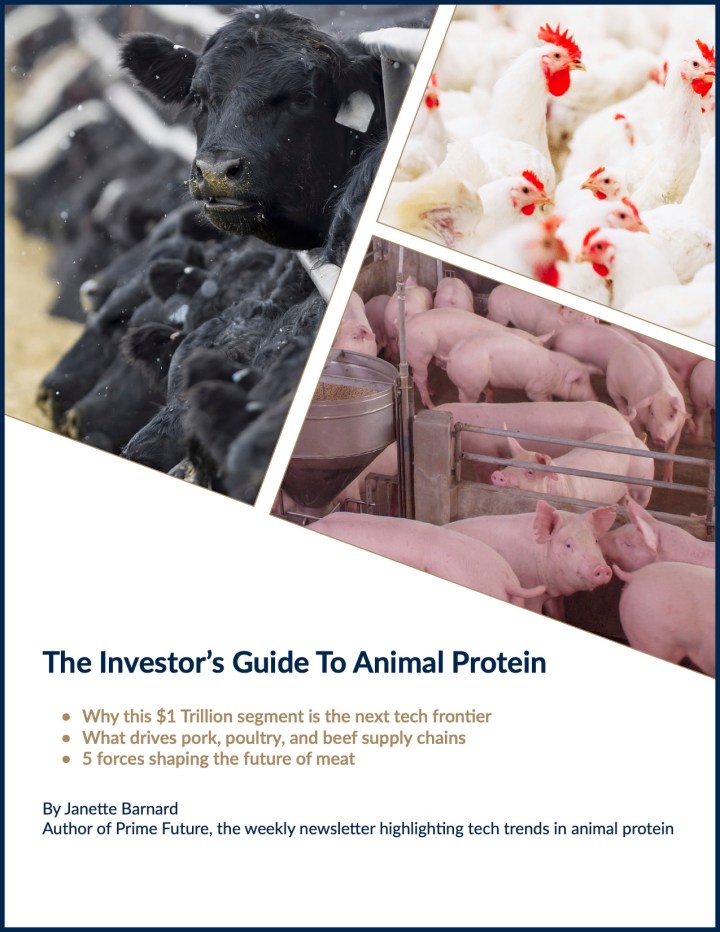
The Investor’s Guide to Animal Protein…I need your help!

“We don’t see many options.” 

“It’s not relevant, it doesn’t move the right needle.”

These are 2 common themes about technology solutions that I hear when talking with big players in animal ag production that would be customers, the strategics that would be acquirers, and the angel & venture investors that would provide early capital to startups building solutions for livestock & poultry producers & processors. 

Let’s not beat a dead horse talking about these problems, my goal is to find solutions. And the best way I know to do that is by talking with smart people, testing some hypotheses, and sharing those learnings. 

In short, I’m writing an ebook and I need your help ?

I want this book to be chock full of relevant context and helpful perspective on animal ag for innovators & investors working in – or considering working in – this segment.

One way I plan to do this is by talking with 25 investors & 25 producers/processors. So here’s how you can help:

  1. If you are an investor in animal ag…
  2. If you are a producer/processor…
  3. If you know someone in one of the above categories that I should talk with ….

….and are game to have a quick chat about this space, or want to send someone my way, shoot me a message.

Oh, and you can pre-order the book here.

Ultimately the 2 big questions that the livestock & poultry sector will have to navigate to radically accelerate the pipelines of solutions are:

  1. How do we attract funding & innovators to tackle the real problems in animal ag?
  2. What’s the funding model that generates return for investors, for entrepreneurs, and most importantly creates real, measurable value for customers? 

My hypothesis is that it will take a non-traditional funding model to drive more innovation in animal ag…and I don’t know what that looks like, yet. That’s one of the questions I’m wrestling with through this process because I don’t think we’ll see any unicorns (privately held companies valued at $1B+) operating solely in animal ag. The industry structure doesn’t support that probability given industry concentration as well as margin structures.

If that’s right, the traditional venture capital model doesn’t fit animal agriculture. 

So we need an innovation model that leads to more great products that deliver high value for customers while generating returns for investors and entrepreneurs. A few dimensions that could drive a tweaked model:

  1. Reduce the amount of time to product-market fit by having startups closely aligned with prospective customers to get early and ongoing customer feedback. This should result in shortened sales cycles and faster adoption.
  2. Reducing the amount of early stage capital required to get to product-market fit. This is a function of #1.
  3. Reducing the amount of time a startup is independent, aka a path to acquisition in year 2-5 instead of year 10-12.

As always, it’s about finding a path where the rewards are commensurate with the risk. If the rewards are somewhere sub-unicorn, which traditional venture capital requires, then the risk profile has to also be lower.

Keep in mind that $741 million was invested into alternative proteins in the first quarter of 2020. The first quarter.

If animal ag intends to stay relevant to consumers, we need to tap into the existential urgency of solving the big problems and channel our collective inner RBG to bring allll the smart people along for the ride that we can find.

“Fight for the things that you care about, but do it in a way that will lead others to join you.” – RBG

Processing…
Success! You're on the list.

Categories
D2C

The 20 year overnight success story of Newman Farm: business model innovation in pork

Listen to this interview with David Newman on the Future of Agriculture podcast (link)

Building a moat is the only way to escape the tyranny of commodity markets, and in this podcast interview David Newman explains why Newman Farm began building a moat, and what they learned along the way.

This isn’t mom & pop stuff, this is business model innovation at scale.

20 years ago Newman Farm made the initial leap from a typical commodity hog operation using scale to manage costs, and began looking for value added opportunities. They ultimately found success selling a premium product directly to white table cloth restaurants. Then as restaurant sales slowed down due to COVID, Newman Farm flipped a switch and entered the direct to consumer business.

What’s clear from David is that making the shift from commodity to value added requires a transformation of every element of the business model:

  • Production decisions: Manage costs —> Increase value proposition
  • Commercialization: Manage commodity market volatility —> Create demand for a unique offering through a sales & marketing capability
  • Ecosystem: I am an independent operation —> I work with high quality partners, we all win and grow together
  • Capabilities: I can figure it out —> Identify & hire critical capabilities to grow

This conversation is for the packer considering the Direct to Consumer sales channel, the producer looking to margin up, or anyone interested in the clever evolution of business models.

Oh, and at the end of the podcast you’ll hear a short interview with the founder of Barn2Door, a software company enabling producers to quickly establish D2C sales capabilities. IMO this is such a smart tech play, it’s basically Shopify for producers.

Listen to David Newman on the Future of Agriculture podcast (link)

Thanks to Tim Hammerich, host of Future of Agriculture, for sharing the mic for this episode!

Processing…
Success! You're on the list.

Pre-Order The Investor’s Guide to Animal Protein (link)

I shared recently that I’m writing a book for investors & innovators about the challenges and opportunities for tech within animal agriculture and that I’m interested in talking with 25 investors and 25 producers in the process. Thanks to so many of you who already reached out to share your insights!

This week I spoke with Luis Azevedo, The Yield Lab partner and former Novus executive, and here are a few interesting quotes:

“There’s a vicious cycle because you have investors who only want to see animal health & nutrition or only want to see technologies for row crops so you miss the technologies or business models that could converge across both. So then the size of the market is smaller and no one is excited as they could be.”

“In the end there is more risk in animal ag because of complexity in scaling those businesses.”

“Animal health & nutrition business models are mostly transactional models. They develop a product, they promote it, they sell it. Meanwhile crop science companies not only develop and commercialize products, they are adding precision services that are changing the business models. More robust business models creates broader connection with producer and the belief that the program is the product.”

(Shoot me a message here if you are interested in sharing your view on animal ag innovation.)