Categories
Animal AgTech

Prime Future 45: What must be true for grass fed beef to scale?

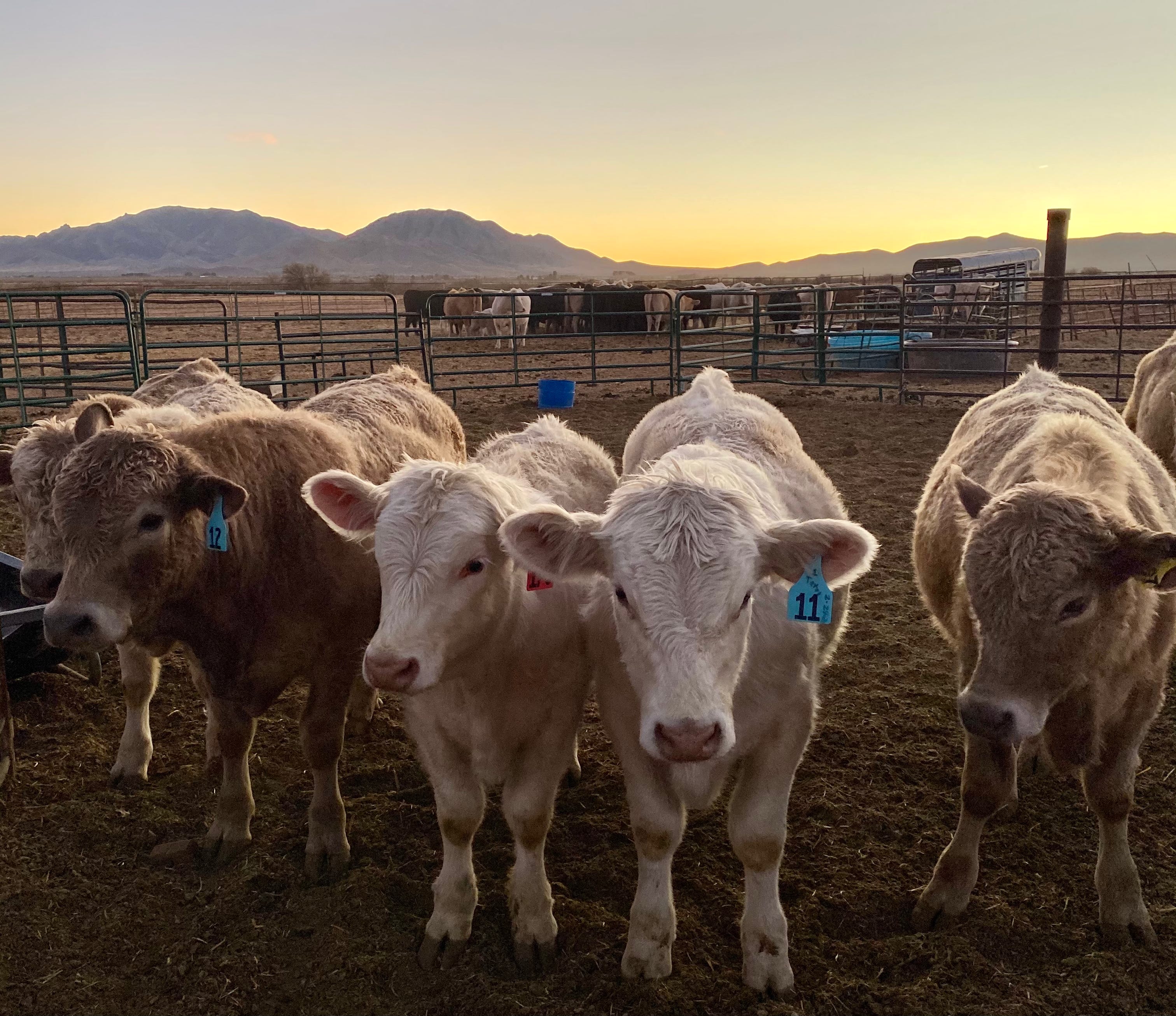
Two recent conversations have me thinking about grass fed beef and specifically, what needs to be true for grass fed to become a meaningful segment in the US?

Some industry folks might already be rolling their eyes at the question, thinking of how inconsistent the grass fed eating experience is, how much more resource intensive it is than grain fed, why it cannot happen at scale in the US, etc.

But, where there’s a market there’s a way. My favorite example, why did the US poultry industry so rapidly flip 50-60% of production to No Antibiotics Ever? Because companies like Chick Fil A, with significant buying power, said this is what we want. So the industry had incentive and urgency to figure out how to make it work. Actually that’s wrong….it wasn’t that “the industry” had incentive, it was that Chick Fil A suppliers had the incentive to start figuring out how to make that paradigm of production work. And then the learnings spread among producers as the marketing claims spread among food companies.

Perhaps we are nearing a similar market signal in the beef market, albeit at a much lower volume than the poultry example, that there is demand for US produced grass fed beef. In a recent conversation Mike Salguero, CEO of ButcherBox, shared their aspiration to source grass fed beef from the US, but in the absence of a scaled grass fed beef sector, ButcherBox sources from Australia & New Zealand. Not an uncommon story in grass fed beef.

(Note – I am not here for a debate on the superiority of grass fed or grain fed. Call me an opportunist but I’m on the side of markets, of producing to high value markets or high volatility markets, whichever you fancy. I’m on the side of asking what needs to be true in order for this new idea to work. And when I cut into a Ribeye, I’m on the side of great marbling.)

So why has grass fed beef not scaled in the US? Well, grass finishing requires more land and time and all the resources per animal, which is why it costs more per pound of meat.

The more important question is, what needs to be true in order for grass fed beef to be viable at scale in the United States? Let me know your thoughts, here are my hypotheses:

  1. Grass fed animals need to finish, to be market ready, in a comparable amount of time with grain fed animals.
  2. Grass fed animals need to have a comparable resource footprint as grain finished animals.
  3. The eating experience of grass fed beef must be consistently good.

Basically none of these things are true today. Today. Under current paradigms and capabilities and available tools.

By no means do I make light of the gap between current state and what’s outlined above, but the next critical question is, how do we make those things true? What are the innovation dials that can be turned?

  • Genetics. Cattle genetics in the US have been optimized for grain finished animals. If genetic selections were made with grass finishing in mind, how could that change the cost structure of grass fed meat in 5 years? 10 years?
  • Nutrition. This is pure speculation, but as we learn more about the gut microbiome and the soil microbiome and the plant microbiome….will it turn out that all of those elements be tied together to improve nutrition for cattle finished on grass? Or, at a minimum, how does any one of those elements impact cattle nutrition?
  • Cattle Management. Any cattle feeder can tell you the feed to gain ratio for any given pen, it’s a key metric that is easily tracked and measured. Not so for finishing cattle on grass! The metrics that enable effective management are not available to graziers, which makes precision management much more challenging. More on this in a moment.
  • Pasture Management. Just as row crop farmers are beginning to manage fields in granular units as a result of precision farming tools, how can a 20,000 acre rancher in Montana reasonably & more profitably manage pastures at a more granular level than by the section (640 acres)?

TECHNOLOGY

Allan Nation, the author of Land, Livestock & Life: A Grazier’s Guide to Finance says that graziers must manage 3 inventories: cattle, grass, capital.

My hypothesis is that we could be on the cusp of tech enabling a transformation in how each of those 3 are managed. Examples include:

  • Software to manage herds and pastures (aka feed inventory)
  • Hardware like smart tags or smart scales to monitor animal behavior, even grass feed intake to enable better management of cattle and pastures.
  • Virtual fencing to enable rotational grazing and true precision pasture management. Frank Wooten, CEO of Vence (virtual fencing startup), joined me to talk use cases & value proposition around virtual fencing in a podcast.
  • Mike Salguero of ButcherBox also pointed out that one of the issues they’ve identified as a barrier to producers finishing cattle on grass is that most operating loans for producers are for 12 months – grass fed producers need longer. Are there fintech plays that can line up the right capital structures here?

I’m bullish on some combination of these technologies enabling a new view on what’s possible as it relates to grass fed beef….or whatever other production systems for which there is a market.

Two related strategy ideas:

(1) INFINITE GAMES

In The Infinite Game by Simon Sinek, the big idea is that a basketball game or other sporting event has a defined end point – whoever has the highest score at the end of the pre-determined time period, wins. The other team loses. Game over. But business is an infinite game. Sure there’s reporting at the end of a quarter or the year, but the game goes on. The game goes on as long as the business can keep playing, can stay in the game.

I say that because there isn’t a grass fed vs grain fed finite game. Not to get existential, but the infinite game is about producing high quality beef that meets customer preferences and willingness to pay….whether that means finishing cattle on grass, grain, or kombucha. Where there’s a market there’s a way.

(2) ALL BUSINESS IS….

A friend of mine loves the phrase “riches in the niches”. It sounds funny, but you can find examples in any industry, including agriculture.

Another friend can’t get enough of low margin, high volume businesses. He’d take a commodity market play any day over a premium market.

Which one is right? Both, obviously.

Which makes me think….if it’s true that “all business is bundling & unbundling”, maybe the adaptation to that idea is that all agriculture is scaling & differentiating. There’s a premium in a low volume niche until it begins to happen at scale and the premiums are competed & commoditized away, and then the premiums are found in a new niche. And so the cycle goes, infinitely.
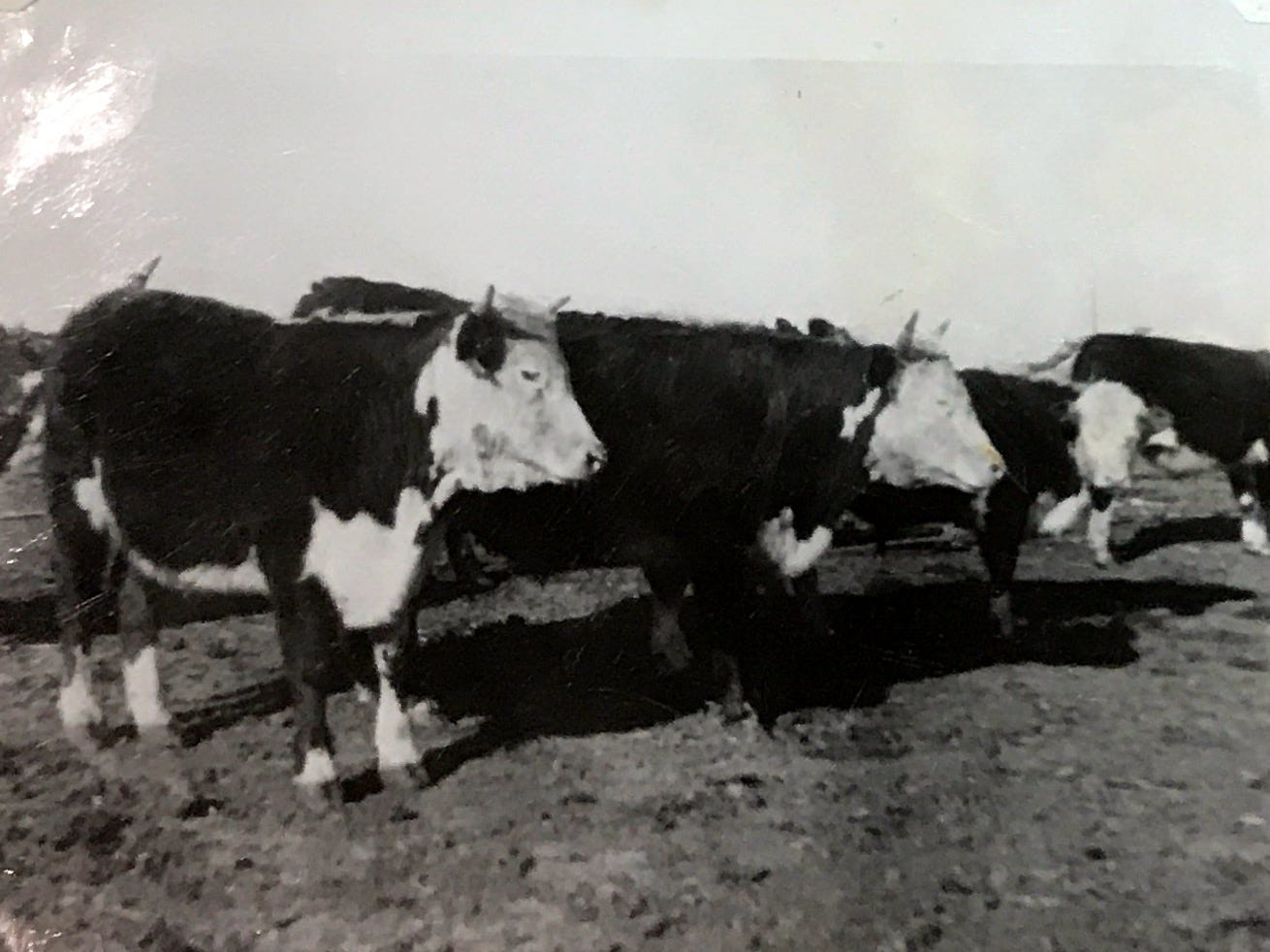
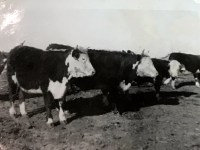
Some steers my great-grandfather fed out in the 1930’s

New Future of Agriculture Podcast Episode!

Check out the podcast episode with Frank Wooten, CEO of Vence, a virtual fencing company about their technology and why it could impact the cattle industry in multiple ways. (LINK)

While you’re at it, I highly recommend signing up for the new weekly newsletter published by Tim Hammerich, host of the Future of Agriculture podcast. (LINK)


Volume 1 of Prime Future is now available in an ebook

My hope is for this PDF to be a valuable go-to resource on all things animal agriculture & innovation. Let me know what you think!
Download the ebook!

Categories
Animal AgTech Business Model Innovation Leadership

Prime Future 44: How to Decide

I was recently making a big decision between two good options, which led me to Annie Duke’s book How to Decide. Duke is a professional poker player turned behavioral decision scientist. One of the most profound ideas from the book is that of evaluating the outcomes of a decision separately from the decision making. Duke points out that we tend evaluate the quality of a decision based on its outcome: good outcome = good decision, bad outcome = bad decision.

But that correlation does not always hold. Sometimes a well informed decision results in terrible outcomes. Sometimes a rash, impulsive decision results in fantastic outcomes. Duke’s thesis is that we can only improve our decision making process when we separate the decision from the outcome, ideally leading to more decisions with better outcomes.

In the first chapter of Netflix founder Reed Hasting’s book No Rules Rules, Reed tells about sitting across from the management of then $6B Blockbuster and proposing they acquire Netflix for $50M. Blockbuster passed.

It is tempting to hear that story and lol at Blockbuster for not making the acquisition. How could they not have seen that their industry was changing? How could they have been so shortsighted to think brick & mortar was the future? How could they have underestimated Reed & his team, or the future of streaming?

With the benefit of hindsight, we know of course that Blockbuster is no longer and Netflix is currently valued at $241B.

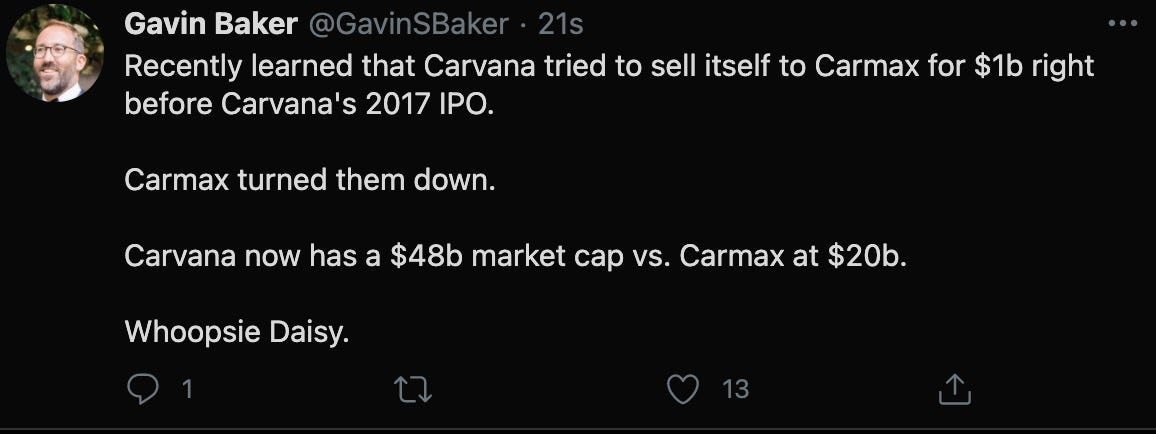
But, did Blockbuster make the wrong decision? Did Carmax make the wrong decision?

Here’s why this is all connected: in a tech obsessed world, particularly in winner-take-all markets (which are fewer than we think, but that’s for another time), the pressure is immense to not be Blockbuster, to not be left behind, to not be the one that didn’t embrace the future. Outsiders love to point out how agriculture is the “least digitized sector” and assume this is because farmers are slow to embrace tech products. Are farmers simply tech averse as outsiders assume….or are farmers making rational risk/benefit decisions that are appropriate for their business context?

Because the truth is, not all tech or innovation decisions lead to good outcomes. Not all innovation is the next big thing. Not every upstart is the next Netflix. Some of it is simply the Segway, cool tech that never finds its use case so it remains a niche product for tech nerds. Some of it is….dare I say….smoke and mirrors. On the super rare occasion, it even turns out to be outright fraud like Theranos (highly recommend the book Bad Blood).

For business leaders, the decision making process is the controllable, the improvable. In all things, including deciding what innovation or tech or tech companies to bet on (whatever the nature of the bet) or what industry trend to capitalize on.

Have you ever noticed that the decisions that led to really bad or really good outcomes are the ones that get all the attention? But, how many exceptionally wise decisions have been made to pass on a product/company that turned out to be the correct decision, that are never known outside of those sitting in the conference room?

Those stories don’t make it on the front page of the Wall Street Journal or into an HBR case study but I expect we could learn a lot if they did.

Here’s how I think hindsight leads us to assess the decisions to bet on a tech company or pass on it, based on the outcomes of how impactive the innovation turned out to be:

Here’s the thing – with the benefit of hindsight we can point to poignant examples of decision outcomes that fit into every category in the above matrix, except for examples of the Unsung Hero. Good defense never gets the same hype as good offense, even though you need both to win.

I could be convinced otherwise, but I think this framework holds true for more than just tech. I think it applies to any new industry trend and decisions made about how to leverage the trend, or not. And again, these decisions get evaluated from the outside based on outcomes.

But there are SO many factors that effect outcomes of early stage companies & early stage technology, from the tech itself, to product design, to go-to-market strategy, to funding sources, to the macro-environment, to industry specific tailwinds or headwinds, to the leadership team, to the pricing model, and on and on and on. Which means, there are SO many factors that affect the outcomes of decisions around early stage tech companies & products. So the decision making process is the controllable.

The relevant question for decision makers of any kind, is how do you make more Obvious Genius & Unsung Hero decisions? I would suggest the following:

  • Make more small bets.
  • Do your due diligence (seriously, reading the book Bad Blood will give you motivation for this).
  • Create a rigorous – and iterative – decision process that you refine as you learn each time. Document your thought process before the decision is made so you can evaluate it in hindsight – most of us are terrible at remembering what we knew or did not know at the time of a decision.
  • Reject all or nothing thinking. Find ways to experiment on a small scale before making go-big-or-go-home type decisions.

My bias is that much of the risk to early stage companies can be mitigated when founders engage early and often in customer discovery, but engaging in that process can also be a way for future customers/partners to de-risk. The challenge for founders is finding the right prospective customers/partners who are willing to engage in the messy, iterative process of innovation. Not everyone wants to see how that sausage gets made.

Right now there are a lot of innovations being thrown at the meat & poultry value chain. With the benefit of hindsight what will be said about bets on…cultured meat? Plant automation? Regenerative ag? Carbon markets? Traceability? eCommerce & brand building? Individual animal management? 3D bio-printing meat? CRISPR?

Time will tell.

How do you improve your decision making process?

On a side note, I usually find that even when I sit down to write for execs at big companies, there are corollary applications for founders of startups and for producers. And vice versa. I hope this was true in today’s content.


Grab the Prime Future ebook (link)

Like what you’re reading? Get all 47 editions of Prime Future to date in one PDF.

Get the ebook!

Categories
Animal AgTech

Prime Future 43: The food & ag labor problem, fixable?

What is one of the most talked about issues across food & agriculture, yet simultaneously wildly under-innovated and under-invested?

Labor.

This issue got a lot of attention in 2020 because of the pandemic but let’s be honest, labor has long been a major issue in agriculture. It’s a top-of-mind & keeps-me-up-at-night issue for both producers and processors of all shapes and sizes & across most geographies, whether you have 10 employees on a farm, 100 employees in a feedyard, or 1000 employees in a packing plant.

On twitter this week, a producer mentioned their plans to scale the farming operation and multiple producers replied with “how are you going to find the labor to make this happen?”

Labor issues range in severity from minor headache to actual constraint on business growth to deciding factor on where to build a new plant.

Before we dig into this topic, keep in mind that we’ve all talked about the expected increase in robotics & automation in processing plants as a solution to some labor challenges. But even with the rise of robotics, smart barns, IoT, etc, for the far foreseeable future there will be significant labor involved in every step of food production and processing.

Optimizing human capital will continue to be an area of opportunity to create outsized impact.

One nuance is that “agriculture” is not a monolith. The seasonal labor needs of a chili farmer in southern Arizona are different than the year round needs of a Tyson plant in Holcomb, KS  which are different still than a grower with 10 chicken houses in northern Georgia.  The labor market of a specific geography has its own dynamics and market forces. Different size businesses have different dynamics and constraints. Different segments have different skill needs.  So saying you have a solution for “agriculture” tells us nothing about who you’re really solving for or what dimension of The Labor Issue you are solving.

Some other nuances that make this such a vexing topic for food & ag:

  • Amount of labor needed – farming and food manufacturing require a lot of human capital.
  • Localized markets
  • Specialized skills
  • Seasonality (some segments)
  • Hard work….really, really hard work.
  • Regulatory environments
  • Ag isn’t a widget production business so people need both good process and good judgement…tricky.

So do we need agriculture specific tech solutions? Yes. You can find several pages on Google search of industry agnostic software solutions for back office processes like payroll. But those solutions don’t address the unsolved challenges vexing food & ag leaders, that are much more complex than running payroll. The real problems are things like:

Safety. Farm work can be inherently dangerous. Manufacturing plant work is inherently dangerous.  In college I lost a friend to a farm accident and a friend to a feedmill accident. We’re talking real human life here. How do we use technology to improve safety and reduce the incidence of injury? How can tech help companies like Cargill that are hyper-focused on safety to further operationalize their safety principles? Or help other companies dial up their focus on improving safety metrics?

Cost. How do we reduce the labor $$ per unit of production? Or how do we turn labor $$ into increased revenue?

Labor availability & workforce managementThese 2 issues can be sliced a lot of different ways here are some of the buckets that create the most challenges:

  • Recruiting – how do you find enough candidates? How do you get the great ones to join your organization?
  • Training – how do you onboard a new employee as quickly and effectively as possible? How do we give employees the opportunity to level up their game and grow in their current role or into a new role? How do we help supervisors & managers be better at supervising & managing?
  • Retaining – the cost of turnover varies, but we all know it’s high. How do we keep (good) employees satisfied & engaged so they stay longer?
  • Rewarding – how do we align individual incentives with business outcomes? I know of a large corn grower that set a bushels per acre goal one year and said that if the goal was met, all employees would get a trip to Hawaii. This pulled everyone in the same direction and not surprisingly, the goal was met.  This might not be feasible for everyone but there are about a trillion and one ways to structure rewards. The main idea is to align incentives for metrics that lead to meaningful business outcomes.

These are all threads that could be pulled and the specific implications within farming and processing contexts, but a lot of ink has been spilled on these topics in general by people much smarter than me so let’s shift to potential solutions.

An interesting tech company that just raised $300M to expand from oil & gas to construction is Workrise, a “workforce management solution for the skilled trades. We make it easier for workers to find work and for companies to find in-demand workers.” Does a company like that move into ag? Presumably. Would/could they account for the nuances in ag mentioned above? TBD.

Here are some AgTech companies that are working on different elements of The Labor Challenge:

  • Ganaz is “the workforce management platform built for deskless workers in agriculture and food manufacturing. We develop tools to help employers recruit, retain, communicate, onboard, train and pay their workforce.”
  • Summit Smart Farms – helps swine producers by “addressing your biggest challenges in labor and technology so you can equip your team.”
  • AgButler is  “a mobile application designed to help users overcome the challenges of agricultural workforce shortages by creating a network of experienced ag laborers made accessible in real-time. Similar to “ride-sharing” technology, our system allows farmers, ranchers and/or agribusinesses to connect with available laborers filtered by location, ratings, work experience and availability. All done within a secure payment structure organized in the app.”
  • DairyKind and Heavy Connect provide targeted worker training solutions.

From an investor perspective, Connie Bowen with AgLaunch describes it this way:

When we talk about pain points in agriculture, there is no pain more acutely felt by all people in the agrifood system than labor.

  • Just care about money? Labor is almost always the largest factor in a farm operation’s bottom line – people are expensive.
  • Just care about health? Lack of technical solutions for specialty crops is a huge factor preventing conversion from row crop to fresh fruit & veg.
  • Just care about ethics? What’s more important than humane [working] conditions and living wages?
  • Just want to invest in a company with a sticky product? Invest in something that does the job and/or enables the farmer and their staff to do the job. Successful past examples include but are not limited to: the steam-powered then diesel tractor [horses/oxen get tired and eat and poop and die], the combine, the cotton gin, effective chemical pesticides.

Labor is a multidimensional problem that is universally felt across food & agriculture. In writing this piece and thinking about it more, my new hypothesis is that labor tech solutions could very well be the most “venture back-able” type of AgTech.

I’d love to know what other companies are tackling this space, just reply to this email if you know any.


Tired of Kodak & BlockBuster as examples of The Innovator’s Dilemma? Here’s one from 1878 courtesy of railroads:

In 1878 Swift (the meat co) hired engineer Andrew Chase to design a refrigerated rail car. Chase’s design proved to be a practical solution, providing temperature-controlled carriage of dressed meats. This allowed Swift to ship their products across the United States.

Swift’s attempts to sell Chase’s design to major railroads were rebuffed, as the companies feared that they would jeopardize their considerable investments in stock cars, animal pens, and feedlots if refrigerated meat transport gained wide acceptance.

In response, Swift financed the initial production run on his own, then — when the American roads refused his business — he contracted with the GTR, a railroad that derived little income from transporting live cattle.

In 1880 the Peninsular Car Company delivered the first of these units to Swift, and the Swift Refrigerator Line was created. Within a year, the Line’s roster had risen to nearly 200 units, and Swift was transporting an average of 3,000 carcasses a week. Competing firms….quickly followed suit.

The punchline? The General American Transportation Corporation would assume ownership of the line in 1930.

The moral for big companies? Innovate early or you pay for it later.


Grab the Prime Future ebook (link)

Like what you’re reading? Get all 47 editions of Prime Future to date in one PDF.

Get the ebook


Categories
Leadership

Prime Future 42: Doomed from the start: how bias distorts

Prime Future 42: Doomed from the start: how bias distorts

A few years ago I set out to tackle the problem of wildly opaque price discovery in poultry, focusing on the $120 billion US chicken market and the ~40% of chicken priced & traded in the spot market. I talked with executives and sales leaders up and down the chicken industry and received widespread affirmation that yes, of course everyone would like a more transparent market with more accurate price discovery and yes, of course, current price discovery is broken. I interpreted the vigorously nodding heads as sufficient evidence I was on the right track so I raised capital, recruited a team, and built out a product. It was then that I realized that when my prospective customers said “yes, of course I’d like to see a more transparent market with more accurate price discovery” what they actually meant was “yes, of course I’d like better transparency into the rest of the market but not at the risk of giving others better transparency into our pricing”.

With the benefit of hindsight, I see every cringe-worthy mistake I made in the earliest steps of that company, in the core assumptions that laid the foundation for everything else.

There are a lot of reasons new companies die and new products fail, but I'm increasingly convinced that the art & science of customer discovery & validation can be de-risking superpowers to new products & new ventures.

Luckily, these are skills that can absolutely be learned and cultivated. Let’s start with definitions:

  • Customer discovery is the process of identifying the core hypotheses wrapped up in a new product, whether about the problem being solved, the target market, the value proposition or any other core element.
  • Customer validation is the process of testing to prove or disprove those hypotheses. (Let’s use the generous definition of product to mean any new product from a hardware or software tech product to an innovative business model.)

Customer discovery & validation can make the difference between success and failure for early stage companies. It can determine the trajectory of a new product for corporates. It can unlock an insight for a new market for a producer or packer. Whether implicitly or explicitly, a thousand decisions about the product itself and the market will be determined by the outcomes of customer discovery & validation. Think of this as the foundation that entire products/ventures are built upon. (That’s why it’s so risky to outsource this process.)

Sometimes the best products are created by those who know the problem & market from firsthand experience, sometimes the best products are created by those who approach the problem with fresh eyes from the outside. Since we can point to examples of each, I’d suggest that (aside from the role of luck & timing & uncontrollables) the 2 best predictors of a product creator’s success are:

  1. Curiosity & humility. These 2 usually go together. Curiosity leads to asking new questions in new ways to get new insights which lead to new ways to solve old problems. Humility spurs curiosity.
  2. Self awareness to resist cognitive biases. More on this in a moment.

Here are some common traps of customer discovery:

  • Strong convictions, loosely held. I observed one startup lose several years building a product the market said it did not want. Despite the market’s continual feedback that the founders’ core hypotheses were inaccurate, the founders resisted updating their mental models which, naturally, had negative implications on everything from product design to sales. Having “strong convictions, loosely held” allows you to move faster and positively impact the trajectory of a product’s adoption. Update your mental models, listen to the market.
  • And yet, the market can’t evaluate what the market doesn’t know. What will you pay for this, how will you use it, when will you use it? People aren’t great at projecting their future behavior so they usually don’t know the answer to hypothetical questions when you’re still in the product concept stage. We all know the Henry Ford saying that if he’d asked people what they wanted, they would have said faster horses. Bill Gates, Steve Jobs, Jeff Bezos, & Elon Musk would presumably all agree with that sentiment. When it comes to product concepts, customers are better at describing what they don’t want than knowing what they do want; insights from the “don’t wants” usually make highly effective constraints for product design. For example, a smart barn product for poultry has to withstand xyz environmental conditions, function without cell signal, and cover x sq feet. Those constraints create a great sandbox to play in.
  • Sometimes its hard for “nice” people to be brutally honest. Nobody wants to say “that’s a dumb idea & here’s why” so instead they say “well, that’s interesting.” The best way to discern whether someone is merely being polite or if they really want a solution like you are describing, is to get cold, hard pre-orders. Someone saying they might purchase something is a very different thing from issuing a purchase order or swiping a credit card. There is an enormous time cost to not recognizing a proverbial pat on the head for what it is.
  • N of 1. Just because 1 prospective customer says something, doesn’t mean there’s a meaningful market that shares that view. Look for trends, not individual data points.

All of these traps lead us directly to the wonderful world of cognitive biases:

“A cognitive bias is a systematic error in thinking that occurs when people are processing and interpreting information in the world around them and affects the decisions and judgments that they make.” — VeryWellMind

Cognitive biases impact us all on the daily, but they can have an outsized impact on the customer discovery process and a new product’s subsequent trajectory. If a business/product is built on a tenuous foundation, the house of cards will fall. Either for the person testing their hypotheses OR for the person responding, here are some practical ways cognitive biases can hijack the customer discovery process:

  1. Confirmation bias leads us to hear what we want to hear and disregard information that disproves our hypotheses. “The reaction to disconfirming evidence by strengthening one’s previous beliefs.” Yiiikes.
  2. Endowment bias is “the tendency for people to demand much more to give up an object than they would be willing to pay to acquire it.”
  3. Anchoring bias is “where an individual depends too heavily on an initial piece of information offered to make subsequent judgments during decision making.” This is why the n of 1 problem is a dangerous trap.
  4. Selection bias is “the bias introduced by the selection of individuals, groups or data for analysis in such a way that proper randomization is not achieved, thereby ensuring that the sample obtained is not representative of the population intended to be analyzed.” Who you go test hypotheses with matters as much as how you test them.
  5. Framing effect is “drawing different conclusions from the same information, depending on how that information is presented.”

The list goes on, but these are the cognitive biases I can link directly with my mistakes in customer discovery from the poultry scenario.

So you know why customer discovery & validation matter and you know the traps to avoid, but what are the elements of a good process?

  1. Articulate your core hypotheses about your product, the problem it solves, the market it serves, and the value proposition. PSA: this is harder to do than it sounds but it serves as an incredibly valuable forcing function to clarify.
  2. Design an experiment to prove/disprove those hypotheses.
  3. Execute the experiments.
  4. Synthesize insights and update your assumptions where necessary.

An experiment could be anything from a conversation/interview with someone in the target market to running a paid Facebook ad campaign to test demand for a product concept. Most often, a conversation is the best place to start as a way to get “clean water”. As you think about structuring a process to conduct conversations that will allow you to test core hypotheses, a few things to consider:

  • Who you talk to. You know you need to talk to more than 1 person, but what about talking to people across a range of functional roles within a company? A range of seniority levels? A range of company sizes? It’s amazing what kind of insights that 5-10 targeted, well structured conversations can yield.
  • How you structure the conversation & frame questions to maximize insight yield. This is the trickiest part, IMO. Remember you are trying to get CLEAN water, not influenced water. There is art & science here, but the quality of the question impacts the quality of the responses. Open ended questions should be the default with only an occasional but highly targeted closed ended question. Planning ahead can help you move from generic open ended questions to incredibly high value questions. Consider a few examples, which one is likely to yield more rich intel?
    1. “Do you try to reduce labor costs?” or “What are the top 3 ways you’ve tried to reduce labor costs in the last 3 years and what did you learn from those efforts?”
    2. “Is it important to increase calving rates?” or “How does increasing calving rates fit into your top 3 priorities for the business this year?”
    3. “How much does x cost annually?” or “What % of your budget does this problem represent today and what is a reasonable target in the future?”
  • How you interpret what you heard. Did you prove or disprove your hypotheses…really?

The principles around customer discovery & validation can be game changers in almost any commercial context from an early stage venture launching software for hog farmers to publicly traded animal health companies launching feed additives to a top 5 poultry integrator offering new products to foodservice customers.

What are your tips for running great customer discovery & validation processes?


Now Available! Prime Future Volume 1 (link)

Get the first 42 editions of Prime Future in a single PDF….95 easy-to-read pages about trends impacting animal agriculture across the entire value chain from production to processing. This was fun to put together & made me all the more excited about the opportunities in this space.

Get the ebook!

Categories
Business Model Innovation

Prime Future 41: What if GroceryTech is the key to the future of meat?

Prime Future 41: What if GroceryTech is the key to the future of meat?

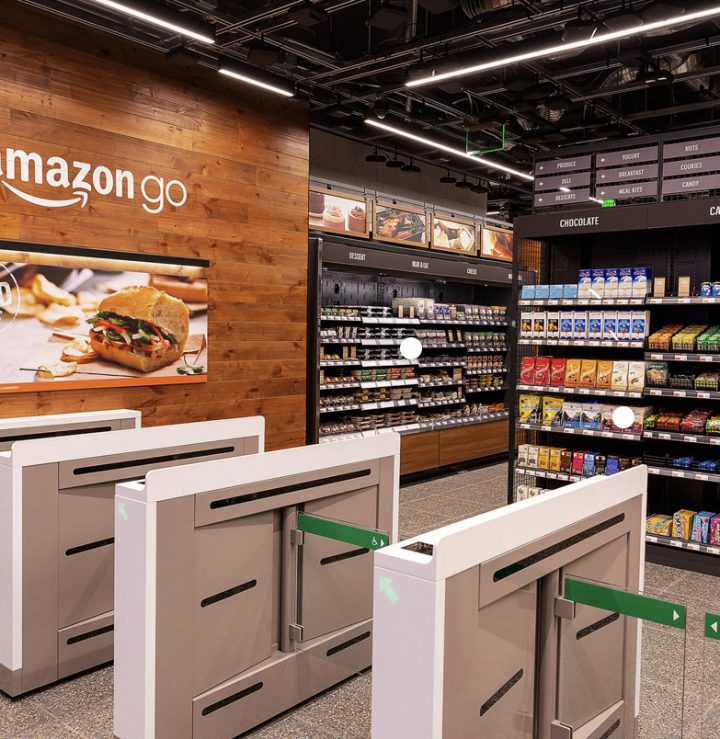
In 2018, Amazon quietly began piloting a new store format, Amazon Go. The premise was this: a shopper walks into the store, scans their Amazon Go app to be allowed through the turnstile, selects items off store shelves, and then walks out of the store. Seconds later, the shopper receives an email with receipt. That’s it.

The shopper just walks out.

How? According to The Verge, “Amazon Go stores use overhead cameras and computer vision technology to track both shoppers and items throughout the store. That way, the system can identify when a specific person has picked something off the shelf and placed it in their cart, and even when they decided to put something back.”

Two announcements by Amazon should catch the attention of primary and further processors:

  1. Amazon is now expanding the use of the technology into a larger grocery format at their new Go Grocery store in Seattle.
  2. More importantly, Amazon is now licensing the technology to other retailers. And branding the technology, cleverly, as Just Walk Out.

According to the Wall Street Journal, “Amazon hopes the grocery store will serve as a showcase for its technology as it seeks to sell its system to other businesses. The company has recently been in talks with potential partners and is targeting retail options including convenience stores and shops in airports and sports arenas, according to people familiar with the matter. Amazon has discussed multiple revenue models, including a fixed licensing fee or a revenue-sharing agreement, one of the people said.”

How could this impact the meat case, and the value chain of case ready plants and primary processing plants?

Three reasons this creates an inflection point in the retail value chain:

  1. Puts the consumer experience on the consumer’s termsIt lets them talk with a store employee when they want to do so, not because they have to in order to make the purchase. As consumers – all of us – continue down the path of customization options to buy when we want, how we want, and what we want, this is a big step in that direction for food retail. And on a related note, I expect this to dial up consumer expectations for the retail experience. How long will it be before checking out with an actual cashier will feel like stepping into 1950?
  2.  Frees up labor to increase service level / create opportunities for a new consumer experience at the meat case. How will retailers reassign labor and take advantage of a way to improve the experience as consumers shop for one of their biggest ticket items in a grocery store? How will packers equip retail partners to do this well?
  3. Enables a data driven supply chain. Not just in theory, but in practice. Today, the only data that packers receive from their retail customers is sales data – SKU, volume, price. Imagine a world in which retailers are able to send packers not only data about shopper decisions, but about the shopper’s behaviors during the decision making process. e.g. the average amount of time a consumer spent looking at one item vs another, which 2 items a shopper picked up before selecting one, how many times consumers picked up one packaging type vs another, and how all of this correlates with actual purchases. Imagine all the ways an increasingly granular view into shopper behavior during decision making could drive relevant data upstream to packers to drive everything from packaging decisions to new product development.

A parallel example is Lemonade Insurance vs Every-100-Plus-Year-Old-Insurance. Insurance companies are set up to sell policies through a distribution network of agents, so the data that flows back to insurance companies only comes from shoppers who submit information to get a policy, or actually buy a policy. All the micro-behaviors in the middle of that buying process are lost because there is no mechanism to capture data for traditional insurance companies.

But that’s not true for Lemonade Insurance, a startup with a buying experience that is digital first. Because Lemonade engineered an online buying process, they are capturing an enormous amount of data about micro-behaviors in the buying process such as, at what point do most shoppers drop out of the buying process. That’s incredibly valuable information to inform either product development OR engineering of the buying process itself. 

I see Just Walk Out as a technology that will enable retailers and their packer suppliers to move from making blindfolded decisions with sales data only, to being able to operate like Lemonade Insurance with an eye opening new level of data granularity to drive better consumer outcomes – either in the product itself or how its sold. 

Note: I wrote all of the above in January 2020. So after 12 tumultuous months, my take on the above hypothesis:

It didn’t happen.

Amazon didn’t expand the use of their “Just Walk Out” product….or at least it hasn’t made its way to Safeway in rural southern Arizona. But in a world relentlessly pursuing reduced human contact during in person transactions, why haven’t we seen this technology roll out either across Whole Foods stores or more broadly across other retailers? If ever there was a perfect moment and an external environment driving the rapid adoption of a tech product, a global pandemic seems like a pretty great reason to ridiculously accelerate adoption of this type of technology. Yet it doesn’t seem to have happened.

So, did Amazon table the roll out of this technology in order to focus all resources on their core business and keeping up with pandemic demand?

Or, did Amazon’s prospective customers (HEB, Wegman’s, Publix, etc) table their interest in the technology in order to simply focus on keeping shelves stocked amidst pandemic demand? What organization has the bandwidth to completely upend their customer facing operations in the middle of all that?

Or, perhaps the economics of this technology don’t actually make sense in the grocery business.

My hypothesis is that the lack of adoption of Just Walk Out is due to resourcing & timing for both Amazon and their prospective customers, and that over the next few years we will start seeing this tech in more grocery stores. If that’s right, this highlights the importance of adoption costs for tech products, aka the costs (money or perhaps as important, time) of implementing the product. Adoption costs are a corollary of switching costs but it’s more about going from status quo to Something New as opposed to going from Product A to Product B. Adoption costs matter for any tech product, whether the customer is a hog farmer in the Midwest, a cattle rancher in Montana, or a national food retailer.


Prime Future Volume 1

From genetics to fintech to gut microbiomes to the meat case, we’ve covered <a lot> of ground since the beginning of Prime Future.

To make it easy to access all in one place, I’ve compiled all Prime Future content into an ebook, Prime Future Volume 1: Trends, Innovations & Tech across Livestock, Poultry & Meat.

Get the Prime Future eBook

Categories
Animal AgTech Emerging Tech

Prime Future 84: Everything is the enemy of something

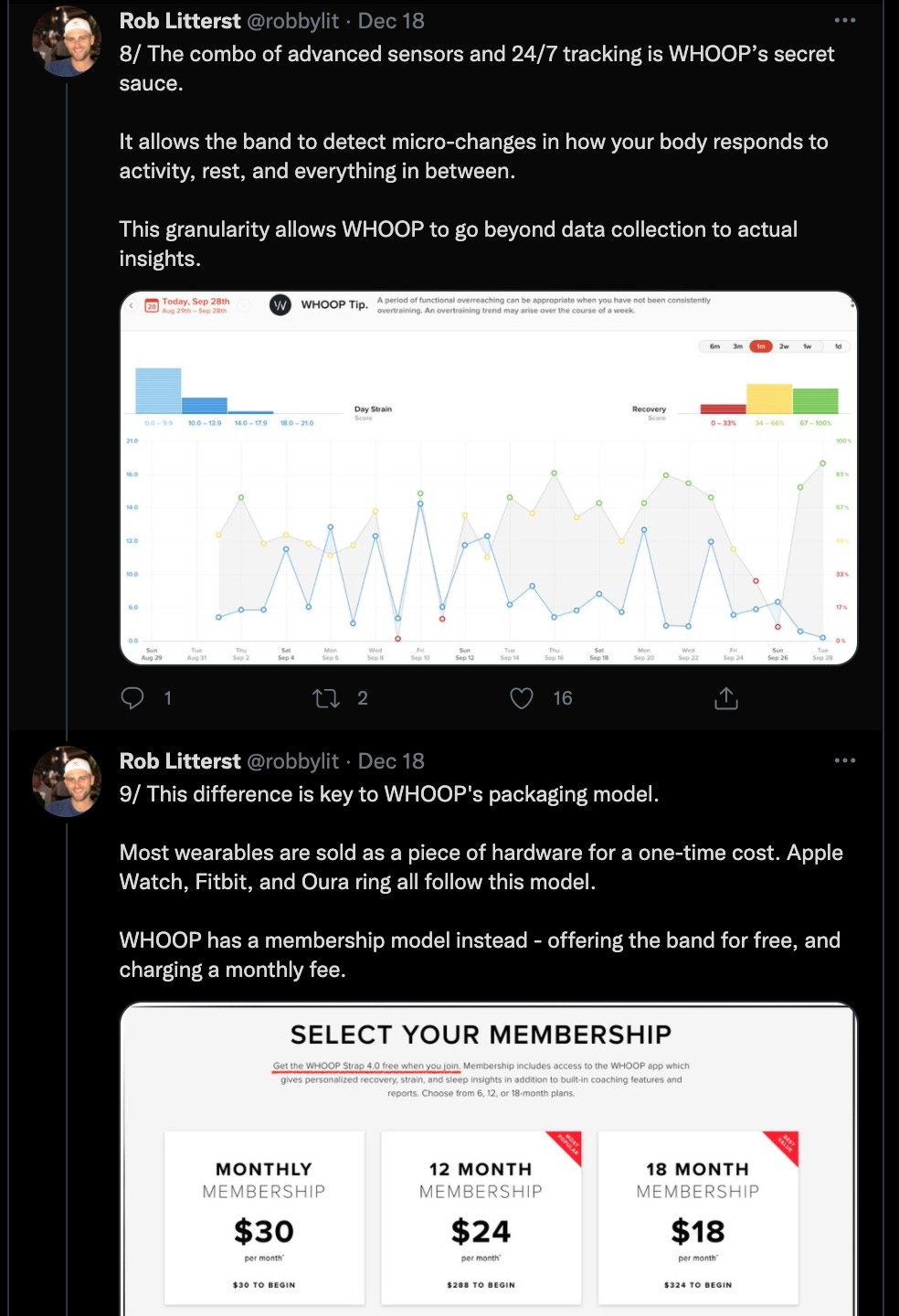
I found the below analysis of the Apple Watch compared with the WHOOP fitness wearable to be a gold mine, with 4 big ideas that tee up 2 paradoxes AgTech companies face.

(1) Specificity can create big markets:

(2) Market clarity impacts everything about the product:

(3) Product-market clarity impacts business model:

(4) Product-market clarity increases value creation:

That’s what a rando outsider sees; here’s what Whoop has to say about themselves:

“Your 24/7 personalized fitness and health coach.”

“WHOOP 4.0 – the latest, most advanced fitness and health wearable available. Monitor your recovery, sleep, training, and health, with personalized recommendations and coaching feedback.”

Let’s go ahead and call WHOOP a really great example of product-market clarity.

(In the tech world we talk all the time about finding product-market fit, but I wonder if product-market clarity makes it easier to find product-market fit. Whether product-market clarity is a leading or lagging indicator to product-market fit is a debate for another day though.)

Now let’s contrast WHOOP with Agtech companies who talk about solving macro, world-saving, how-would-humanity-continue-without-us types of problems. I’ve never once heard a producer lament those problems though; producers don’t typically have a…

  • pressing need to feed the world
  • generic, burning need for analytics
  • acute lack of artificial intelligence or machine learning or blockchains
  • dire need for transparency

And yet that kind of grandiose-but-vague language is all over websites and marketing materials in the ag industry, particularly from agtech startups.

On the other hand, I have heard many a producer talk about the ongoing struggle with questions like:

  • how do I access premium markets?
  • how do I increase predictability of cash flow?
  • how do I reduce medication costs?
  • how do I manage rising labor costs?
  • how do I grow top line revenue? increase margins?
  • how do I manage weather and disease and market risk?
  • how do I accurately manage animal inventory?

Going back to the very first idea from the Apple Watch vs WHOOP analysis, specificity can create big markets. And yet, that leads to the 1st paradox for agtech companies.

The “Everything is the enemy of something” paradox:

the harder you try to have broad appeal by not limiting your product, the harder you make it for target customers to know that your product could be for them. The more you try to appeal to everyone, the less you appeal to anyone.

This paradox shows up as a temptation for tech startups to avoid clearly articulating what their product does for whom, because a prospective customer might have a different use cases.

Then valiantly-struggling-to-get-off-the-ground tech co says HEY NO PROB WE CAN DO ALL THE THINGS. 🤦🏻‍♀️

Counterintuitively, the idea “our product can do anything” is the biggest enemy of traction because it puts the burden on prospective customers to discover how the product can create value for them.

Specificity can unlock big markets. Getting really clear about the use case and value proposition is how you get really clear in talking to your target customers….but only if you use clear words, the 2nd paradox.

The “Clear Words Paradox” is this:

the more you use jargon (tech or otherwise) to build credibility with target customers, the less credibility you have with your target customers because the words mean nothing.

My high school English teacher used to say ‘words mean things’ – laughably simplistic, but true. Words mean things. Getting the message right means getting specific and using market relevant words with clear meanings.

In my experience, producers tend to be an unpretentious population. Not only does pretentious/superfluous/jargon-y language not help a sales process, it usually hurts the sales process by slowing the conversation down…or killing it.

There’s no benefit in using words that don’t have significance or relevance to our target customers, usually serving the only purpose of making us think we sound smart or innovative. 🤭

With those 2 paradoxes in mind, here are 2 questions to ask yourself about product positioning:

  1. Am I providing substantive & specific use cases that allows a producer to see how this product solves a specific problem they might have?
  2. Am I describing the use case in language that is clear?

At first glance, today’s topic is only relevant to those in agtech. But actually my hope is that this gives some helpful language to the innovative producers who engage with agtech startups in the earliest days of beta testing or even early customer discovery. It’s ok, often even really helpful, to tell startups ‘those words mean nothing’ because that’s how they find clarity. I imagine WHOOP struggled through that same process in its early days too!

Everything is the enemy of something.

Categories
Business Model Innovation

the story behind Walmart & 44 Farms, an unlikely partnership

You’ve probably read about Walmart and 44 Farms teaming up to create a coordinated beef supply chain but in this Future of Ag podcast episode, you’ll hear the whole story directly from the horse’s mouth. Or rather, the mastermind producer that helped a Walmart CEO map out a path to solve the chronic issues in the retail giant’s most vexing supply chain by reimagining how beef could create higher value from producer to consumer. You’re in for a treat with this podcast, listen here.

Lamar Steiger was actually introduced to me this year by a friend of Prime Future. I’m thankful for every Prime Future reader and the conversations you’ve sparked around the future of animal protein & how we make it happen.

Processing…
Success! You're on the list.
Categories
Business Model Innovation

When does Amazon jump in?

Exhibit A: Walmart started a milk bottling plant.

Exhibit B: Costco built a chicken complex to assure supply for its signature $5 rotisserie chickens.

Exhibit C: 44 Farms teamed up with Walmart to create Prime Pursuits, a coordinated supply chain to deliver high quality beef to Walmart stores.

“By closing that loop and managing every link of the production-to-plate supply chain, Costco and Walmart now have direct control of their products’ production, quality, price and profit.”

There are multiple trends we could talk about here:

  1. Retailers moving upstream. Who and what comes next? Amazon (Whole Foods) acquiring Bell & Evans? Kroger building their own pork plant? Whole Foods and <cattle genetics co of choice> teaming up to expand the Country Natural beef supply chain? Albertson’s buying a feedyard? This upstream expansion plays out amid the simultaneous trend of retailers expanding their footprint closer to the customer through grocery delivery and digital offerings.
  2. Traceability is meaningless until somebody will pay for it. The industry has thrown around the t word for at least a decade with extremely limited success in finding the right use case & corresponding business case. Like all innovations, until the right business case surfaces it’ll never happen. However, coordinated supply chains likely are the business case that supports traceability particularly when the data flows in both directions so producers get better feedback on how animals perform in the feedyard/plant, and consumers get relevant cues about how the animal was produced.
  3. “(S)he who owns the brand, owns the power.” Ok it’s not exactly an ancient proverb, but it’s increasingly true, is it not? Animal protein has been a volume game for decades and wow did the industry get good at that game. Lower costs, increased efficiency, max throughput. That shift to scale and lower costs is what created the opportunity for the pendulum to swing to create an opportunity for differentiation, aka de-commoditization.

And all of the above trends support the rise of coordinated supply chains that drive end user value and producer profitability by aligning incentives accordingly, primarily in beef since vertical integration is the name of the game for most pork and all poultry.

ICYMI, in this Future of Ag podcast episode you’ll hear the juicy story of how & why 44 Farms and Walmart teamed up to improve Walmart’s reputation at the meat case. This isn’t the first coordinated supply chain in beef, its just an incredibly notable example because of who’s involved & the potential industry impact if it scales successfully.

So, how is a Coordinated Supply Chain different from a traditional/transactional/fragmented supply chain?

The primary attribute of coordinated supply chains is incentive alignment from first player to final player; coordinated supply chains are strategic, long term, and oriented to increase value for all players by focusing on the deliverable to the end customer.

Coordinated supply chains are asset light, data capture heavy. So, when does a coordinated supply chain make sense?

  • Strategic importance, e.g. Costco chicken
  • Decrease cost, e.g. Walmart bottling plant
  • Increase value, e.g. 44 Farms/Walmart beef

(Yes, 2 of the above are vertically integrated supply chains but the outcomes are similar although the structure slightly different.)

For more color commentary from the Walmart beef example, below are some takeaways from my interview with Lamar Steiger on why the world’s largest retailer decided to shake up its beef supply chain:

  • “Senior leadership knew that Walmart had a well deserved bad reputation for being the place you don’t go for red meat. You can’t change that over night.  Obvious beef is a very difficult supply chain, so you have to just get started.”
  • When Walmart execs sat down with ranchers, “Everyone was surprised at how authentic and open the Walmart leadership team was sitting down with ranchers, saying “we have a broken system that doesn’t work for Walmart or our customers” and ranchers saying “the system of marketing our cattle to the next stage of the supply chain is not working.””
  • “Sustainability without traceability is at best a good guess and at worst, fiction” (As an aside, IMI is the verification system for the program. If you are a producer capable of selling full truck loads of cattle and are interested in participating, reach out to IMI.)
  • “Walmart wanted to build the supply chain around Angus cattle. Not that Angus has any better quality than any other breed, it was about the size (# of head) and reputation that they have.” (Attn breed orgs & genetics companies – branding matters)
  • “We needed to find a packing plant that was not one of the 4 majors, to get some insights into how it works and how we can better work with existing suppliers. The beef business is so resource intensive that real vertical integration is a challenge. Walmart is not going to vertically integrate the supply chain, this is digital cooperation not vertical integration.” (Side note: imagine if you are Tyson/Cargill/JBS and suddenly your largest customer can call your bluff on a range of topics because they actually understand how your business operates….game changer?)
  • “Customers are demanding a change and demanding to know more, across all food segments. Professional ranchers know there needs to be change but none of us know how that will play out. I’ve been surprised by how little all of us know about the rest of the industry.”
  • “Few people (in beef production) are paying close attention to what customers are telling grocery stores, while grocery chains just assume cattle people will send best cattle and that quality is most important to them. Except cattle producers get paid by the pound, not for quality. There’s friction in the idea that the more weight on the animals the more you get paid, vs the quality and how that affects the customer eating experience.”
  • “The market signal is that quality and consistency is more important than ever. Customers want to make their own decisions. That allows all of us to figure out which niche and which program we want to be with. We can get a premium for better cattle. I believe in the future the base price is going to be in a program and the rest will be in a commodity. If you’re not in a program, there will be a discount.” 
  • How do you think about the juxtaposition of Walmart’s trademark focus on reducing cost with this example of increasing cost in pursuit of quality? “That’s the big dilemma, working to both manage cost and drive quality.”

I love the strategic exercise of re-imagining how a supply chain is organized and the potential impact, but it seems even more important that we turn loose of outdated mental models given that this week the first lab grown / cell cultured meat was approved by a regulatory body for commercialization. Singapore consumers will soon see chicken breasts & nuggets that are farm free, slaughter free, manure free, smell-and-neighbor-bothering free. While this doesn’t mean the sky is falling for farm-raised meat and poultry, it does signal that its time to get serious about solving the big problems in order to keep meat and poultry relevant for consumers. And by relevant, I mean keep the category as the go to food in the next pandemic…(like in 2420 or some time long after all of us are gone, knock on wood).

Part of the Singapore lab grown chicken case study will be about why Singapore – a country seeking to increase its food production capability to 30% of demand – is the first country to approve the sale of cultured meat, and how the product lands with consumers.

Processing…
Success! You're on the list.
Categories
Animal AgTech Animal Health Funding

Venture Investing in Animal Health

“If we can’t get to a strong ROI for the producer very quickly, it’s an easy pass for us.”

?? a nugget that the partners from Fulcrum Global Capital, a global food & ag venture capital firm, shared in a conversation on venture investing in animal health including:

  • The key areas of opportunity in animal health, across both biotech and digital, and from an outcome based perspective – not just raw efficiency. (Go to the 5 minute mark in the YouTube link below.)
  • How Fulcrum works with their investor base of actual producers, a non-traditional approach compared with most venture funds backed by institutional capital. (12 minute mark)
  • The benefit to producers of investing in a venture fund. I’m intrigued by the idea of giving producers an opportunity to invest in their area of expertise and generate venture returns while giving them access to solutions that address operational problems, potentially creating even larger returns from an operational standpoint. (19 minute mark)
  • When is venture capital the right tool to scale a startup. “Venture is good when you have a founder that has aligned beliefs with venture capital – disruptive tech, scale quickly, exit within a specific time frame. We’re looking for solutions to billion dollar problems across global agriculture.” (27 minute mark)
  • The exit market is being defined as we speak. One of the challenges with animal health, especially drugs and vaccines, is sometimes those are long runways that don’t match up with venture timelines. Understanding how those pieces fit together (runways, exit paths, multiples, etc) will start to define what levels of risk capital will be available to founders and help investors understand what parts of animal health will be venture backable.”

This conversation has relevant gems for producers, entrepreneurs, and strategics. Check it out here (link) and subscribe to the Prime Future YouTube channel while you’re there.

Processing…
Success! You're on the list.
Categories
Animal AgTech

Telus Agriculture marks Animal AgTech 2.0

The 2018 Merck acquisition of Antelliq, a “digital livestock and animal health tech company”, marked Animal AgTech 1.0. That mega acquisition was to livestock tech what Monsanto’s 2013 acquisition of Climate Corp was to crop focused agtech.

Fast forward to 2020 when Telus, the Canada-based communications giant, recently unveiled their newly formed Telus Agriculture business which includes 7 acquisitions and counting, with beef as a priority vertical. Telus Agriculture’s first major acquisition in beef was Feedlot Health Management Services whose “individual animal data collection and execution tools help optimize production efficiency and overall animal health by supporting data-based decision making for feedlot and calf grower clients.” That acquisition is especially interesting because it gives them a unique starting point right smack dab in the center of the beef value chain from which to link upstream to cow-calf producers and downstream to packers, retailers, foodservice.

The announcement of Telus Agriculture marks Animal AgTech 2.0 for two reasons:

  1. This is a non-traditional entrant moving into the ag industry in a big way via the tech door. Microsoft, Amazon, IBM are making miscellaneous moves but they do not yet appear to fit into a clear framework like Telus Agriculture. So if the dark horse comms company can make a mega splash, who else could?
  2. This approach is an example of rolling single point solutions into a platform to drive broader outcomes for customers than the individual value of any single offering.

In the journey to market maturity, it’s time for the Livestock Tech market to converge into more platform based approaches. Why??

For starters, as the market gets more crowded with digital (software or hardware) products, the cost of customer acquisition increases as does the cost of making a good buying decision. Producers have more sales reps vying for their time for a sales call and more brands vying for their attention, adding time and cost for tech co’s and frustration for producers. If you need proof of this, go ask a large row crop grower how it feels to have 47 precision ag startups trying to sell to you…it’s a nightmare.

More importantly tho, the promise of digital is about driving improved business outcomes like profitability, return on assets, etc. The promise of digital is about enabling new business models, new organizations/outcomes of entire supply chains, new management systems. An individual solution like a calving monitor might drive an individual metric like decreased mortality, but it’s one tiny piece of farm operations which is one stage in the supply chain. Think of a one-off solution, like a smart syringe, as optimizing a cog in the machine while the platform approach Telus Agriculture seems to be pursuing is oriented to optimizing the machine itself.

To realize that promise, the livestock tech market needs to see a transition from multiple one-off, single point solutions to portfolio or platform approaches. We need to see convergence in this market.

Going back to Telus, this quote to AgFunder speaks to the big picture they are building to and why it could matter to the beef industry:

“As a result of these deals, Telus Agriculture now believes it has the capacity to connect every participant in the ag value chain, from seed manufacturers and farmers to grocery stores and restaurants. More acquisitions are on the menu, Armbruster says. In particular, the business has its eye on people power, as well as specialty crops and livestock.”

Aside from Telus, who else is in a position to aggregate tech solutions for producers and processors?

An obvious answer would be the equipment companies. But look around, what are the equipment companies really doing besides defending legacy systems, googling “cloud-based” and working hard to keep data silo’d so neither upstarts nor their customers can extract higher value from the data? Let’s assume for now that equipment companies are not going to change the game. Side note: I’d love to see an equipment co get aggressive here.

The likely answer is animal health companies who are already making moves in this direction, particularly Merck and Zoetis. Their acquisitions in 2020 alone indicate the animal health category’s candidacy to be the digital aggregators. Until Telus, effectively Merck and Zoetis *were* the exit market for animal agtech startups.

Perhaps a real but un-obvious answer is the integrators & processors themselves. I believe there are 2 that are in a position to potentially pull this off: Cargill and Tyson. Cargill has tech segments scattered across the behemoth with more and more hires working on how to leverage tech for internal operations, supply chain, and with customers. Although Tyson has not demonstrated this capability *yet*, their $200M+ investment in their automation center last year followed this year by the selection of a tech leader as CEO indicate that moving in this direction isn’t out of the realm of possibility. Cargill’s diversification makes them the more likely candidate to do so, Tyson’s new leadership makes them a more dramatic candidate. Outcomes TBD.

Another option would be mid-market companies, aka what Facebook was when they acquired Instagram in 2012. (Not apples to apples but you get the idea.) While you might point to IndigoAg on the crop side as being a potential acquirer of new co’s, what similar co would you point to in livestock and poultry tech? In dairy, Dairy.com is a great example with 2 acquisitions of software providers in 2020 alone. Will we see dairy.com equivalents in beef, pork & poultry? I hope so, for the sake of the ecosystem and fostering a robust exit market for startups and investors. But let’s mark this a TBD for now.

A less likely option might be private equity plays that grab several co’s for a roll up, but I’m not sure there are enough animal agtech startups that are mature enough for that play to work. Maybe that’s 3.0?

Processing…
Success! You're on the list.