Categories
Meat Meat retail

Prime Future 140: Flip retained ownership on its tail.

Just for giggles, let’s play a game.

Imagine a world in which packers borrowed the retained ownership model and applied it to the meat case.

  • How would the risk & reward equation change for packers? for retailers?
  • How would incentives change?
  • What positive or negative impacts would be felt upstream, if any?

The background:

Much of the ag industry is structured around one thing: risk management. Ownership structures, commercial agreements, procurement models….all largely built around the equation of risk relative to reward.

Risk seekers want room to roll the dice to maximize upside, risk mitigators want to minimize the downside.

Almost every decision about buying or selling a commodity (however loosely defined) can be distilled down to an implicit risk/reward equation.

The setup:

A common model in US cattle feeding is retained ownership, in which a cow-calf producer or stocker will retain ownership of their cattle through the feedyard instead of outright selling the animals to the feedyard. If they sell the cattle to the feedyard then the feedyard owns the production & market risk on those animals, whereas if they retain ownership of those cattle then the producer or stocker owns the production & market risk on those animals.

Retained ownership of calves through feeding is not an uncommon model and it can have interesting implications for behavior. For example, a cow-calf producer who is going to make or lose money based on the live performance of an animal in the feedyard might make different decisions early on than a producer who sells weaned calves at the local auction barn.

Meanwhile the transaction between food retailer and packer remains largely the same: the retailer forecasts how much of each SKU they will need for any given time period and what price they will pay the packer. Of course there are different flavors on the transaction but at the end of the day it all comes down to $x per pound * y pounds = total amount retailer owes packer.

This standard arrangement has implications:

(1) The burden of forecasting how much fresh meat will sell through the meat case rests with the retailers.

But demand planning is a tricky business. Underestimate demand and the meat case will sit empty, overestimate demand on fresh meat that has a very real expiration date means when that meat is sold in the spot market it’s a fire sale situation.

Both are bad. So this capability of demand planning is critical to the P&L of the meat department at any retailer. Part of the challenge is that you’re forecasting multiple variables at once; get any one of them wrong and you get the whole picture wrong.

(2) Then there’s the portfolio effect for retailers.

Aka how the meat case lever is positioned within the food retailer’s broader strategy.

(3) Meanwhile the big challenge for packers is the idea of balancing the carcass.

Balancing the carcass means selling the primals at an equivalent rate relative to their percent of the carcass. This is a continual high-wire act because not all cuts are in equivalent demand at any one time, it’s why in times of high wing demand chicken processors wish for an 8 winged chicken.

The thought exercise:

So let’s apply that retained ownership model to the meat case and play it out. What if the retained ownership model was used by packers to retain ownership of fresh meat through the meat case until the end consumer purchases it?

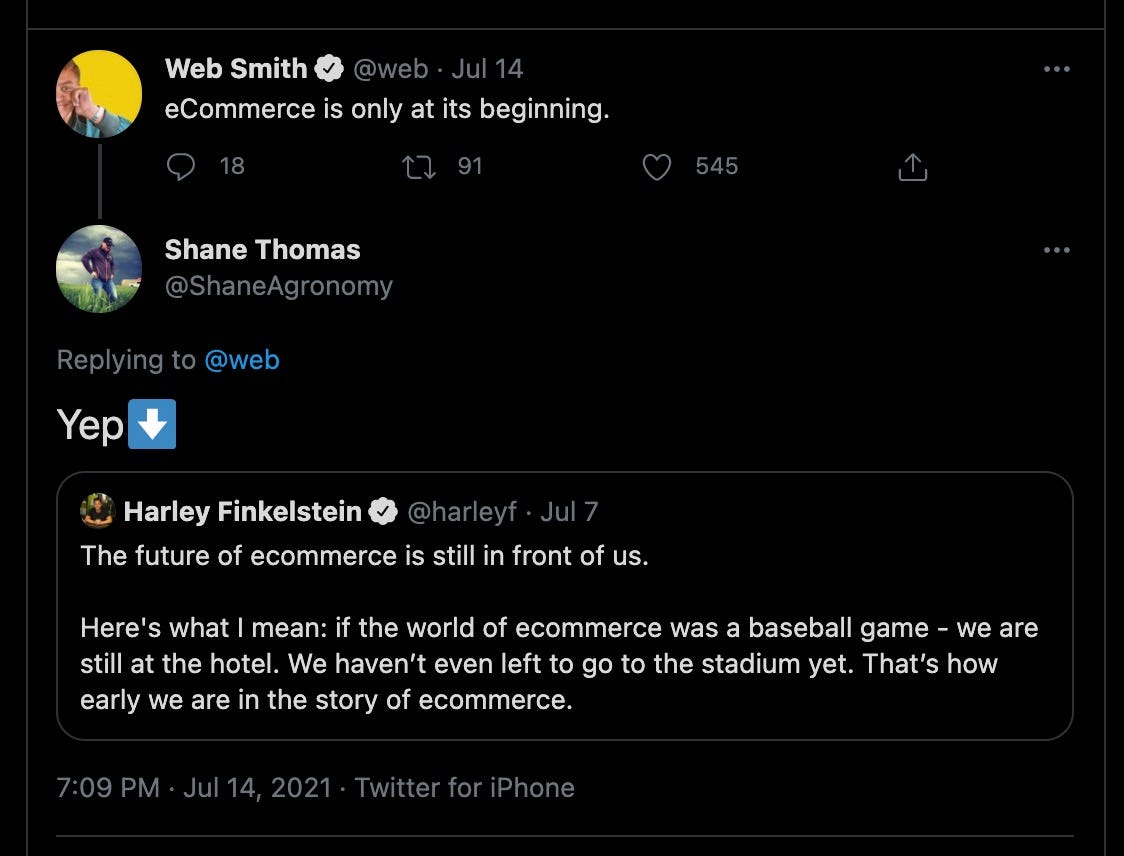
This would mean retailers could adopt what cattle feeders call the “hotel model” where the cattle feeder gets paid a flat rate by customers for the use of that space (and management, feed, meds, etc). So imagine the retailer gets paid a lease fee by the packer for the use of their retail meat case.

In theory, it completely shifts the burden of demand planning to the packer who….drum roll please….has an even bigger incentive to get demand planning right.

One meat industry friend put it this way when I posed our scenario:

It would allow packers to be radical in retail pricing to balance the carcass. An example is strips and ribeye steaks are most often priced the same at retail but the primal values are wildly different. This makes demand uneven so if we could drive pricing off actual primal values, then we could better balance demand for the carcass.”

At the highest level, I’d summarize the pros & cons this way:

Although, perhaps you could make the argument that for those retailers who are less good at demand planning and therefore often have revenue loss from being out of stock or fire sale’ing excess fresh meat, perhaps on a net basis they could wind up in a better position through this model?

On the other hand, for some packers the idea of a bird in the hand (relatively fixed price per pound) might be better than the potential upside of the riskier model.

But let’s say this became a thing. If packers can own the meat through the meat case at retail, why can't the stocker who retains ownership of their cattle through the feedyard, retain ownership through the plant or all the way through the meat case?

The absurd thought experiment:

Now let your imagination really run wild, what if a cow-calf producer could retain ownership all the way through the meat case?

This would take deep pockets because the cash cycle in this scenario is 18+ months. That’s a while and likely few producers would have the appetite for that type of timeline unless the return were significantly higher.

It also makes me wonder if this type of arrangement wouldn’t lead to more vertical integration into cow-calf production. Specifically, it makes me wonder what would have to be true for vertical integration in beef to happen at scale, but more on that another time.

But maybe this is all silliness and would never happen for reasons I’ve totally missed here:

  1. I’d love to know those reasons.
  2. What’s a better hypothetical alternative to business as usual at the meat case?
Categories
Meat

Prime Future 136: 1975 should call the pork people

Does the name H.A. Etling mean anything to you? Me neither, until recently.

What about Certified Angus Beef, does that ring a bell? Of course.

We’ve looked at the Eggland’s Best model, an OG asset-light business model. But CAB is an even earlier asset-light business model; CAB is the largest beef brand that owns no cattle, no packing plants, no shackle space.

CAB generates revenue by licensing the use of its brand to packers, so its sole function is limited to generating demand for CAB-branded beef.

And yet according to CAB’s website:

Ninety-five percent of consumers recognize the brand name, and consumers rank our brand most often as the best among all grades, types and brands of beef. More than 16,000 restaurants and grocery stores worldwide feature the brand.”

That 95% number is 🤯. The CAB brand sold more than 1.234 billion pounds of beef in FY 2022 making it by far the largest and most well-recognized beef brand in the US.

In a world where building a brand is like scaling Mount Everest, especially building a brand that endureshere sits a non-profit doing the hard thing. It’s hard to point to any single largest lifter of all boats with a bigger impact than CAB.

So what does H.A. Etling have to do with CAB, or innovators in livestock, meat, and dairy?

He was the producer mastermind behind the whole thing! An Angus cattle producer himself, he sent a letter in 1975 to the Angus Association outlining his idea for a franchise program for premium beef, which became CAB. Even today, CAB is almost identical to the original outlines of the program Mr. Etling proposed.

(The full letter is at the bottom of this newsletter and if Prime Future adds no other value to the world, I hope reading Mr. Etling’s letter refreshes your sense of optimism that sometimes little ideas become big things.)

Now set Mr. Etling’s 1975 letter next to this 2023 article, The Pork Industry Needs its Wagyu Moment:

“A large portion of pork products at the grocery store are bland, resulting in disappointed customers and flat lined sales. We need to produce and market better tasting pork.”

We as an industry have allowed inferior pork to become the standard. This is pork that is bland, dry, white, has no marbling, tastes awful, and leaves one wondering why they bought it in the first place. There’s a reason why bacon costs so much when compared to other cuts of pork – it has marbling, it has taste, and it’s universally loved by so many because of this.

Overall, meat consumption has actually gone up but pork consumption has not moved, why don’t people want to eat more pork? We need to be producing pork that consumers actually want to eat.”

Can I get an amen?

While the article raises some great points, I don’t think the pork industry needs a Wagyu moment; that’s like jumping straight from crawling to marathon running, skipping every step in between.

What the pork industry needs is an H.A. Etling moment.

The pork industry today needs some of the very things Mr. Etling said the beef industry needed in 1975, such as:

  • A franchise program
  • A rigid contract and inspection program for that franchise program
  • Mechanisms to verify the product meets program specs
  • A brand that people can recognize and an advertising program

But first, you need a quality grade system to underpin it all.

Somebody needs to porkify CAB to start creating a high quality and consistent eating experience for pork consumers. But there’s a zero percent chance I’m the first person to say this.

So, people of pork: why hasn’t this already happened?? What’s kept it from being a thing?

And since we’re in a series about everyone’s favorite words, you know CAB ties in 😁

CAB’s model has allowed them to scale efficiently and to focus on the specific capability of marketing beef, something that if we’re being really honest, most beef brands aren’t great at.

And because of that model, CAB can make this claim: “Every pound of product is tracked from harvest to the consumer, ensuring the integrity of our product, logo and brand name.”

But ‘harvest to consumer’ only describes the last 2-3 of the 5-7 total links in the beef value chain which highlights the challenge around traceability in a fragmented value chain without vertical integration.

In the absence of owning animals their entire life (and beyond), being able to track product from harvest to consumer IS the win.

Particularly since we’re talking about tens of harvest facilities as opposed to hundreds of feedyards or hundreds of thousands of cow-calf producers.

This CAB example highlights that traceability & transparency can be sliced many different ways, particularly in longer, more fragmented, more complex supply chains. In beef, traceability &/or transparency sometimes cover birth to harvest to consumer and sometimes only cover birth to harvest or harvest to consumer.

Traceability & transparency capabilities are limited by the business model of a specific supply chain unless the industry’s traceability capabilities supersede a supply chain’s capabilities.

But then traceability & transparency are no longer competitive advantages, they are table stakes capabilities….unless taken to more granularity than the industry. And then you come full circle back to the question of who will pay for that additional granularity, can large brands get enough supply with high granularity of traceability &/or transparency, etc.

All that to say, we need more precise language to accurately describe the scope, depth, and degrees of traceability & transparency.

And finally, we can’t talk about H.A. Etling without talking about the power of ideas that come from within an organization or industry.

The idea for CAB wasn’t generated in a board room, it was generated by a cattle producer with a vision.

The idea that became Amazon Prime wasn’t Jeff Bezos’ idea, it was originally generated by a relatively junior engineer in a meeting with peers. (Here’s a fun article about it.)

And the idea for flaming hot Cheetos wasn’t developed by product development or R&D. It came from a janitor.

The point? Innovative ideas are the purest meritocracy.

What a time to be alive 😉


H.A. Etling’s letter that arguably changed the beef industry, a thing of beauty:

Categories
Meat Regenerative Agriculture Supply Chain

Prime Future 120: Game over, polyester.

I don’t know if I’m just noticing it more, or if there has actually been a serious increase in buzz around the topic of sustainability and the fashion industry in recent months. Either way, sustainability at the intersection of textiles, agriculture, and oil & gas industries seems to be a *super* complex topic.

I’m no expert in any of this, but all roads lead to livestock so here we are…learning out loud.

Spoiler alert: there are reasons to believe livestock could be a big part of the solution.

Let’s start with a summary of the fashion industry’s sustainability problem, according to Bloomberg:

“The fashion industry might not be the first that comes to mind as a superuser of fossil fuels. But modern textiles rely heavily on petrochemical products that come from many of the same oil and gas companies driving greenhouse gas emissions. Today, in fact, fashion accounts for up to 10% of global carbon dioxide output — more than international flights and shipping combined.

Eighty-seven percent of the total fiber input used for clothing is ultimately incinerated or sent to a landfill. Textiles are the second-largest product group made from petrochemical plastics behind packaging, making up 15% of all petrochemical products.

When it comes to the environmental impacts of the industry, fast fashion is often blamed. But high-end brands originate trends and generate demand for new styles, which are then mass produced by fast fashion companies for a fraction of the cost.

Polyester has overtaken cotton as the main textile fiber of the 21st century, ending hundreds of years of cotton’s dominance. The global market for polyester yarn is expected to grow from $106 billion in 2022 to $174.7 billion by 2032.

Polyester requires a large amount of energy to produce. In 2015, polyester production for clothing emitted 282 billion tons of carbon dioxide, triple that of cotton."

Or as this article framed it:

“Producing clothing and footwear leads to 8 percent of GHGs (greenhouse gases).

The first-mover innovators are guiding the industry out of its linear ‘make-sell-dispose’ approach towards business models that are more circular and eco-friendly. Business model innovations cover reduction, reuse, repair, recycling, and sharing. It transforms the way business is undertaken and value is generated by attempting to drastically limit the resources and material inputs required in the industry’s value chain and minimising the ecological impact of its activities. The new model adheres to the principles of sufficiency and a circular economy.”

Much of the fashion & sustainability “innovation” has centered around re-shaping buying habits, e.g. buying second-hand clothes or buying higher-quality pieces that last longer, with plenty of startups focused on changing how consumers shop for clothes more sustainably. And that drive to escape the fast fashion model makes sense.

But my original question when I started down this rabbit hole was, why is there not more focus on the actual materials used in manufacturing clothes? More specifically, why are natural fibers like wool not playing a central part in the fashion sustainability conversation?

Initial research led me to Woolmark, “the global authority on Merino wool and owns the Woolmark logo, a quality assurance symbol applied to more than 5 billion products.” According to their website, in 1955 ~95% of major textile fibers were natural (wool, cotton, cellulose) and 5% were oil based synthetics.

Today, it’s more like 30% natural fibers and 70% oil based synthetics. 😵‍💫

(Oh, and 10/10 recommend this 1-minute video from their brilliant campaign, “Wear wool, not fossil fuels.” The video is kinda weird but so well done.)

But where I geeked out is watching this 12-minute video about ALL of the potential fiber applications for wool, not just in fashion. Spoiler alert: there are a lot.

First of all, wool prices have been low for decades since they boomed with the Korean War (a lot of soldiers fighting in a cold region meant astronomical demand for wool uniforms to keep soldiers warm) and then bottomed with the post-Korean war erosion of demand for lamb meat AND the explosion of synthetic materials for clothing manufacturing, beginning with polyester.

In the video, the question is asked of what’s the advantage of wool and what are the advantages of plastics. The advantages of wool, among others, are that it’s biodegradable, fire retardant, and odor resistant. Meanwhile, plastics are….cheap.

Where the video gets really interesting is in the description of new technology to create pellets made of wool, Shear Edge, that can be made into thousands of products – basically any product that would otherwise be made from fiberglass. Shear Edge shows examples from kayaks to ice chests to pigments, which go into everything from cosmetics to industrial applications. Pretty wild stuff.

In a world obsessed with natural and renewable, how is a reversion to wool not an obvious mega trend in textiles manufacturing?

This will be interesting to see how it plays out. In 10 years, will natural fibers be at 40% of total textile fibers? 50%? Or are consumer purchase decisions not going to match what they say on surveys about sustainability as a driver of purchase decisions, and polyester maintains its dominance?

In the very real battle between what people say they want and what they are willing to pay for, which will win? TBD.

The most interesting question is, what innovations will drive wool costs closer to those of synthetic fibers to reduce or eliminate the price tradeoff?

Clothing mostly uses fine wool that is softer. Strong or course wool is what’s used for things like carpet, or used to be used for these more rugged or even industrial applications until plastic-based materials took off. And although higher quality meat characteristics tend to be correlated with stronger/coarser wool, that seems like the kind of problem that genetics companies must be tackling, right? Somebody(s) must be working on the beef x dairy equivalent for the sheep industry with meat x wool genetics?

The beauty of broadening applications for wool by applying new technology and processes is that it’s a classic example of using the whole buffalo, so to speak, with what seems like real potential to satisfy customer and consumer demand AND drive market value for farmers.

Or as the Woolmark guy put it “We are taking the waste of low-value wool, and deriving value for farmers with it.”

JR Simplot would be so proud.

And once again, what’s old is new? What a time to be alive 😉

This is obviously the tip of the iceberg so if you are working on any of these topics, please reach out – I’d love to learn more about what’s happening in this space and how and why. For all I know, I’m just a sucker buying the party line from an industry association because I want to believe livestock is the future of everything….

Categories
Meat Processing

Prime Future 117: Walmart: 800 pound gorillas make really weird dance partners

In 2019, the now $371.4 billion market cap retailer announced that they were tired of being treated like the red-headed stepchild by major beef packers and being the grocery store that shoppers went to for everything except beef. Walmart had decided to do something about it. It was time to level up:

In 2021, Walmart announced the launch of its premium fresh beef brand in 500 stores across the southeastern US, McClaren Farms:

In 2022, Walmart announced this:

A lot of folks say the minority investment in Sustainable Beef is a game changer.

I disagree.

It’s interesting, but it’s nothing more than an incremental continuation of their current strategy. Not a shift, certainly not a game changer.

A Walmart minority investment in a slaughter plant makes sense given its recent investment in the supply chain behind its McClaren Farms brand, including the acquisition of a case-ready plant.

But if Walmart were serious about beef processing, they’d build/buy their own slaughter plant. Not make a minority investment in someone else’s.

Today we look at why this minority investment is not a big deal, future potential moves Walmart might make that would be a big deal, and wargame how packers and other retailers might respond.

First, let’s look at the scale of Walmart’s retail beef business.

In the US, 2021 fresh beef sales at retail were $30.1 billion. And in 2021, Walmart had 18% of US grocery market share. Using rough math we can estimate Walmart beef sales at $5.1 billion. Given Walmart’s efforts to improve the quality of fresh beef sold in their stores to increase per pound revenue AND volume, let’s say they’re targeting $8 billion in beef sales by 2025. Whether they hit that or not, this is not a tiny business.

But the bigger impact on the Walmart P&L might be from the ‘basket lift’, or the increase in the total spend, when a shopper buys beef. I don’t have any idea whether that number is .25% or 25% or anywhere in between. But safe to say that when applied across Walmart’s scale, it represents meaningful revenue.

Now contrast those beef numbers with the dairy case, specifically looking at fluid milk. Total 2021 US retail fluid milk sales were estimated at $12.6 billion so an estimated Walmart share is $2.3 billion.

Yet in 2016 Walmart announced it would be building its own milk processing plant in Indiana.

Milk is a much smaller business than fresh beef, yet Walmart opted for total control. That’s one reason my hypothesis is:

If Walmart were serious about beef, they would be buying or building their own kill plant.

Unless this minority investment is a precursor to a bigger move, the baby step before the monumental leap.

Let’s assume Walmart has learned a lot in the last few years from their McClaren Farms aligned supply chain, working with 44 Farms to source Angus genetics and maintain alignment from cow-calf to feedyards to slaughter at Creekstone Farms to final processing at the Walmart case-ready plant operated by FPL Foods.

Contrast that with the supply chain for the remainder of their beef that is NOT McClaren Farms brand. That supply chain, from a Walmart perspective, is both simple and standard for a retailer: buy meat from the packer. Easy as pie.

With a few years of McClaren Farms learnings under their belt, let’s assume the Walmart team has learned A LOT about aligning incentives, navigating industry fragmentation, the challenges of managing a complex biological system, managing costs through the supply chain, and more.

So it makes sense that the minority investment in a slaughter plant is another step in that journey both to scale and expand the McClaren Farms brand beyond the 500-store pilot, AND to continue learning in order to inform Walmart’s future strategy to continue elevating and differentiating its fresh beef offering.

Just for fun, let’s play out some possible scenarios. What might Walmart’s presence in the beef industry look like in 5-10 years?

  1. Status Quo. Slowly grow the new McClaren Farms supply chain in & beyond the current 500 stores. Possible.
  2. Decelerate. Walmart exits Sustainable Beef, exits case-ready plant, winds down McClaren Farms brand. Possible but unlikely.
  3. Accelerate. Walmart decides that beef is as strategically central to its future in food retail as the rotisserie chicken is to Costco’s strategy, and echoes Costco’s decision to build a rotisserie chicken plant by buying/building a wholly owned Walmart beef slaughter plant. Highly likely, IMO.

Let’s say Walmart purchases or builds a beef slaughter plant in the next 3-5 years. How would Walmart’s suppliers respond? What about retail competitors?

Let’s briefly wargame this from 3 angles:

  • What Sustainable Beef might do if Walmart bought/built a plant
  • What the big 4 packers might do (Cargill, JBS, Tyson, National Beef)
  • What other retailers might do (Kroger, Albertson’s, Amazon)

Let’s start with Sustainable Beef. Perhaps a Walmart acquisition is the likely exit strategy for early investors in Sustainable Beef. We recently talked about the criticality for these upstart plants of building a consistent customer base for carcass balance and revenue maximization, so let’s assume that Walmart is that anchor customer in the short run. So one scenario is that Walmart as anchor customer gets the plant to full utilization, and then if the business proves successful, Walmart buys out the other investors. That’s potentially a great outcome for those investors.

But also, there’s a risk that Walmart uses both the relationship with Sustainable Beef, and the insights gained from that relationship, as leverage with their other packer suppliers. Those other packer suppliers also happen to be the companies who, over the long term, are better positioned to be supplier partners to Walmart than Sustainable Beef because of their scale and diversity of capability.

The kicker is that if the McClaren Farms brand only sells into 500 stores today, that’s only a fraction of the total beef Walmart needs to source. The rest comes from the big 4.

So now that Walmart is a minority owner in Sustainable Beef, Walmart is both customer and quasi-competitor to the large processors.

This is messy stuff. You can’t ignore Walmart, it is definitely the 800 lb gorilla of beef retail customers. In this case, you have to dance with the 800 lb gorilla, but wow is it an awkward dance if you are both its competitor and supplier.

And what about other retailers? Would Kroger or Albertson’s follow suit? Would this be what drove Amazon into the packing business? I can see these players trying to replicate the aligned supply chain of McClaren Farms, or even buying their own case-ready plants. But I’m skeptical that it would make sense for any other retailer to make a move into slaughtering cattle given the necessary scale.

And then there are the known unknowns that could impact future Walmart decisions like how the macro environment might change from inflation to interest rates, how the cattle cycle moves, or how capital markets move. And whether in a few years the upstart plants breaking ground now are being sold as those operators realize the challenges of starting & running a beef processing plant (see Prime Future 114 below).

And then there are the unknown unknowns, the next black swan that either pushes Walmart further upstream or pulls them back to their safe space at retail.

That’s a lot of unknowns. But the one thing we know for sure is that Walmart is the 800-pound gorilla of the retail meat case. And that gorilla won’t be ignored.

What a time to be alive 😉

Categories
Meat Processing

Prime Future 114: Meatpacking isn’t rocket science.

It’s weird how often people/media say that meat supply chains broke during COVID.

Were supply chains stress-tested? Absolutely.

Did supply chains bend? Yep.

Did supply chains break? I don’t think so.

Consumers being forced to settle for a flank steak because the ribeyes are cleared out does not mean the supply chain broke, nor does being forced to settle for bone-in chicken thighs instead of boneless. These are objectively #firstworldprobz.

For those whose worldview says that supply chains broke, the go-to solution seems to be more localized, regional supply chains. To these folks, the cohort of soon-to-be-built processing plants looks like a golden next era of the meat business.

Then there are those who see packers as the source of all evil in the livestock value chain, those wretched keepers of the margin. To these folks also, the soon-to-be-built processing plants might also appear to mark the beginning of a golden era.

All that to say, there are a lot of folks cheering on the development of these new regional plants. As am I, if for no other reason than because competition makes everyone level up.

And yet, there's a phenomenon that has played out across the US beef industry for a few decades. Here’s how it goes:

  1. The cattle cycle swings margin to packers
  2. Cattle producers think “hey, they can’t have all the margin”
  3. Cattle producers think “meatpacking isn’t rocket science, we should buy/build a plant and capture some of that margin ourselves”
  4. Cattle producers pool their money and buy/build a plant
  5. The cattle cycle swings margin to cow-calf producers & feeders, away from packers
  6. Cattle producer-investors declare bankruptcy on their processing business
  7. Repeat at the next swing in the cattle cycle

With more recent announcements about plans for building regional packing plants, I’ve been thinking about some of the traps those plants will have to deftly navigate in order to avoid step 6 above.

Here are 4 watch outs for upstart meat processors:

(1) Sourcing cattle. With the drought in the US shrinking the cow herd by the day, the next 24-36 months could be a reeeally tough time to be establishing a processing business when competing with not only the big players but also a growing number of regional players for a smaller pool of cattle. Smaller supply + higher demand is great for producers but tough for processors…especially upstarts.

But cattle markets are local, and depend on the triangulation of (1) where these plants are located, (2) where the cattle they will source are located, all in relation to (3) where the big 4’s plants are located. This location triangulation becomes all the more critical the higher transportation costs are, and the tighter cattle supply is.

(2) Competitive margins. These regional plants processing fewer head per day than their larger counterparts will have higher processing costs per pound, simply because of the math of spreading fixed costs across more pounds. And if you can’t compete on cost, then you have to remain competitive via topline revenue which means either premium programs or some other path to higher sales price per pound. The big players largely play the commodity game with the mountain of meat; these emerging plants will have to create and play a different game.

(3) Carcass balance. Sourcing cattle and processing them efficiently are big enough challenges, but perhaps the biggest challenge of all is selling the entire carcass. Anybody can sell high-value middle meats, it takes a well-oiled sales machine to sell the entire carcass, even more so to do that at premium prices.

(4) Ability to recruit & retain talent, at all levels. Several hundred million dollars in capital projects for automation investments have been announced by the big 4 in the last few months, because of the labor crisis. Both accessing humans to do work, and the cost at which the humans are willing to work in a processing plant. This is not a small problem. This is not ‘build it and they will come’. A labor strategy right sized (read as: plan for higher wages than you would have even a year ago) for the current labor market is critical.

I wanted to test my hypothesis of the above traps with industry experts who’ve actually managed large-scale beef plants and know what it’s like to manage the business of buying cattle, processing and disassembling carcasses, and navigating customers relationships.

As someone who knows the beef processing business well, Nicole Johnson-Hoffman said, “I would agree with your watch outs and add that complexity is a factor. Unless you have a large organization to spread the costs across, you struggle to afford the high cost of compliance and sophisticated talent.”

Meatpacking may not be rocket science, but it is wickedly complex.

Another industry friend added, “It’s all about double shifting to be the most efficient. That’s a big battle and takes a lot of start-up capital for many years to turn the corner on profits. At first, you lose more the more cattle you kill as a total but you have to kill more cattle to ever get over the hump. It’s a double edge sword.

Carcass utilization is the biggest link to packer profitability. You need international sales channels for items, plus retailers, plus food service. You need all 3 to balance the carcass. Plus hide, blood, rendering products that pay the bills. On top of that is the case-ready piece. If you’re building a plant and not thinking about cutting the final product to a retail/food service customer then you can’t last playing the commodity game with the big 4. But you have to have a customer to do case ready.”

There is a reason meatpacking has seen so much consolidation; it may not be rocket science but it is a deceptively challenging business.

Now for the bull case for these new plants:

  1. If large cattle producers are invested in the plants, then that should increase the ability of the plant to secure cattle even when the big 4 are paying more for cattle than the regional plant can. The producer-investors will have a different level of economic commitment.
  2. There are more opportunities than ever for branded programs and unique selling propositions that target a specific customer segment in a specific market.
  3. Some argue the market has structurally changed in recent years with packer consolidation and that the cattle cycle is no longer the same. Maybe so. Maybe that structural change will mean these emerging packers will be operating in a different environment than prior attempts at this playbook with a higher probability of success.
  4. I’m always going to be on the side of people making bold moves. I hope these moves pay off and that these producer-investors get Scrooge McDuck rich, start acquiring competitors, and keep growing until they themselves are considered big players who need shaking up by the next generation of upstarts. Circle of life.

Time will tell whether this time was different, whether this really is a new era in US meatpacking🤞

Meat industry folks – what did I miss here? What would you add?

Categories
Markets Meat

Prime Future 104: Oil based insights from ga$ price$

This April headline caught my eye:

Although it’s a bit dated now since oil prices are back up, the article is still relevant as it answers the question by looking at the structure and complexity of the value chain.

Prime Futurists when someone mentions value chain complexity

“Oil prices have tumbled almost 20% from a multiyear peak in March, but the prices American drivers are paying at the pump are still hovering around record levels.

The difference between the costs of oil and gasoline has attracted attention from politicians, some of whom have accused oil companies of price gouging, as U.S. inflation soars.

Oil prices have in fact been falling more quickly than gasoline prices. Oil was at $100.60 a barrel Tuesday, down about 19% from an almost 14-year peak in early March, while a gallon of regular gas averaged about $4.098 on Tuesday, only about 5.4% lower than the all-time record in March.

But the system that turns oil into gas in the U.S. is big, complex and not controlled by any one company. Thousands of companies drill for oil. Dozens refine that oil into fuel. And tens of thousands of largely independent gasoline stations sell that fuel to customers.”

Of course this is all interesting because holy ga$ price$ 😵‍💫, but mainly because of its parallels to price chaos across protein value chains over the last couple of years with both live animal prices and meat and milk prices.

Maybe there are some oil based insights that are relevant for livestock?

To explore that, let’s start by comparing the structure of oil with a protein value chain – let’s use beef. Full disclosure we are going to hunt for insights by oversimplifying things; you’ve been warned.

The article explains the gasoline value chain like this:

  • ~9,000 companies drilling for oil
  • 129 companies refining the oil
  • ~130,000 (mostly independent) gas stations selling gasoline

Contrast that with the beef value chain:

  • ~900,000 cow-calf producers selling calves
  • ~300,000 stockers selling feeder cattle
  • ~26,000 feedyards finishing cattle
  • ~80% of cattle processed by 4 packers selling meat into export, foodservice & retail channels
  • ~63,000 grocery stores who sell to meat eaters (but a way smaller # of chains, obvs)

Even though the commodity’s characteristics obviously impact value chain structures, it’s not actually that relevant to our ‘so what’ today. But here are a few similarities and differences in oil/live cattle and gasoline/meat:

With that context, now to the good part!

“When gas station owners buy more expensive fuel, they typically wait two to four days to start substantially raising pump prices because they are reluctant to lead the market in price increases. When oil prices decline, gas station owners also tend to follow more slowly, with pump prices floating down “like pigeon feathers,”….”

Implicit in this paragraph is the idea that these independently owned gas stations do not have the ability to systematically manage price risk other than the timing of changing retail prices which is in a wickedly competitive market since there’s a gas station or 10 on every corner. They are exposed to market risk both in how they buy and how they sell.

But if live cattle is oil & meat is gasoline, we run into a narrative violation.

Many would say that live cattle prices are low and meat prices are high because of concentration among the packers. But in the oil & gas scenario, refining is also fairly concentrated yet gas prices remain high because of fragmentation at gas retail. Wait…concentration or fragmentation can cause market funkiness?!

Whether gasoline or feeder cattle, buying or selling a commodity inherently includes price risk. As a seller, the more you identify as a price taker the more price risk you are exposed to. Duh.

But larger organizations tend to have the capability to better manage risk, from the sophistication and know how to create risk management *strategies* to the systems that help execute risk management *tactics*. It tends to be the smaller players that absorb the price uncertainty because they tend to have less resources and capability and so are less likely to manage risk.

(Obviously there are outliers – I see you.)

The ‘so what’ is that regardless of what commodity you are in the business of producing/processing, at the extremes there are 3 options:

  1. Swim in the sea of commodity price risk. Ride the wave of profit in, and the wave of loss out, expecting the waves to be favorable over the long run.
  2. Get really really good at managing price risk from strategies and tactics to systems and discipline.
  3. Channel your inner fairlife milk / Eggland’s Best eggs / Snake River Farms beef to get as far out of commodity markets as you can by positioning yourself in non-commodity markets. Or at least in markets that are less commodity-ish.

None of those are right or wrong. Empires have been built from all 3 options….and empires have been lost from all 3.

None of those 3 are necessarily exclusive – many successful businesses have built the even more impressive capability of knowing when and how to use all 3. Meta.

I have a regular debate with a friend about whether it’s better to be in a low margin high volume business or in a lower volume higher margin business. Of course it comes down to two assumptions:

(1) this is a ‘different strokes for different folks’ kind of question which includes personal preferences and capabilities and resources.

(2) the key to make low margin high volume work is to lower volatility and lessen the impact of cyclicality – however you make that happen. Whether it’s through flexing capacity, a financial hedge, long term supply agreements, some other strategy, or the systematic combination of multiple strategies.

My aha from comparing meat and oil is that lessening the impact of market cyclicality is basically the business of production – wherever you are in the value chain, whatever value chain you are in.

I come back to this topic somewhat frequently for a few reasons:

  1. Because sometimes people who work around agriculture but not in production fail to appreciate what it’s like to operate in a commodity market. Spoiler alert: it’s hard.
  2. I love talking to super successful producers because they inevitably have simultaneous strong conviction and hard won humility about this topic because they have built a systematic approach to managing market risk – whether it’s being fully exposed to the market to capture the upside of the good years by having enough equity to ride out the bad years, or whether it’s creating brands to get out of the commodity category, or laser focusing on having the lowest cost of production.

Who knows what gas prices will do over the next 2 years. But if we’re going to pay out the nose we’re at least gonna try to learn something from it, amirite? Especially if it’s true that oil and cattle have more in common than the Permian Basin. 😉

What aha’s does the oil:cattle and gasoline:meat analogy bring to your mind?

Categories
Business Model Innovation Meat

Prime Future 99: Learnings from a rotisserie fueled flywheel

The only things certain in life are death, taxes, and the $4.99 Costco rotisserie chicken.

Inflation in the US hit 8.5% in March 2022, the highest since 1981. Food prices up, gas prices up, energy prices up.

But the Costco rotisserie chicken? $4.99 for evaaaah.

This is similar to the Costco founder’s now infamous conviction around the $1.50 hot dog. When new’ish CEO Craig Jelinek went to former CEO and Costco founder, Jim Sinegal, complaining that the hot dog price needed to increase because the company was losing money on it, the founder replied, “If you raise the <expletive> hot dog, I will kill you. Figure it out.”

To figure it out, aka manage costs, this behemoth retailer built their own hot dog factory to supply the more than 100 million hot dogs sold per year. They also moved upstream into the chicken business, building out an entire poultry complex just to supply their need for  more than 85 million rotisserie chickens per year.

Even amidst the highest inflation in 40 years, Costco still hasn’t raised prices on these two items. That is conviction.

That is conviction about a proven tactic in service of a larger strategy, one part of a system. The tendency of a Costco shopper is to do large infrequent trips so the rotisserie chicken is a bet on getting people in the door more often and when folks are in the door….well, you know how it goes at Costco. That $2-3 loss on the rotisserie chicken is more than made up for when the shopper walks out with a $100+ basket of other items.

This reminds me of the Amazon flywheel, a mega theme of the book ‘Amazon Unbound’. Bezos’ core conviction was that customers want lower prices and more selection, and that those two expectations would not change over time. So the Amazon flywheel goes like this:

  • Offer low prices to get customers.
  • Having customers allows Amazon to bring on more sellers.
  • More sellers provide more selection which brings more customers.
  • More customers brings more revenue which Amazon can invest into systems to lower prices.

And the flywheel spins faster and faster. (Sure Amazon sales dropped 3% this last quarter but let’s assume thats a blip as the pandemic impact winds down.)

Aside: I’ve read multiple books about Amazon the last couple of years because they are one of the most fascinating companies to study. I get it that not everyone loves Amazon, I’m working on finding other companies to use as examples though 😉

Jim Collins developed the flywheel concept in Good to Great:

Picture a huge, heavy flywheel—a massive metal disk mounted horizontally on an axle, about 30 feet in diameter, 2 feet thick, and weighing about 5,000 pounds. Now imagine that your task is to get the flywheel rotating on the axle as fast and long as possible. Pushing with great effort, you get the flywheel to inch forward, moving almost imperceptibly at first. You keep pushing and, after two or three hours of persistent effort, you get the flywheel to complete one entire turn. You keep pushing, and the flywheel begins to move a bit faster, and with continued great effort, you move it around a second rotation. You keep pushing in a consistent direction. Three turns … four … five … six … the flywheel builds up speed … seven … eight … you keep pushing … nine … ten … it builds momentum … eleven … twelve … moving faster with each turn … twenty … thirty … fifty … a hundred.

Then, at some point—breakthrough! The momentum of the thing kicks in in your favor, hurling the flywheel forward, turn after turn … whoosh! … its own heavy weight working for you. You’re pushing no harder than during the first rotation, but the flywheel goes faster and faster. Each turn of the flywheel builds upon work done earlier, compounding your investment of effort. A thousand times faster, then ten thousand, then a hundred thousand. The huge heavy disk flies forward, with almost unstoppable momentum. 

All of this leads me to 3 takeaways:

(1) Enduring principles anchor dynamic systems.

It’s easy to look at these retail B2C businesses as something different than the B2B companies we find in production or processing. But every business is a system. Every business buys stuff to make stuff to sell stuff.

In production agriculture, the output is largely a commodity. But whether the output is commodity or differentiated, the system of how the output is produced matters as much as the output itself. The how determines the what.

Enduring principles about what will not change, like the conviction of both Costco & Amazon founders that consumers prefer lower prices. That’s why business model innovation gets so interesting.

So, what’s not going to change in livestock, meat & dairy?

  • We’re talking about living creatures in complex biological systems. We understand more about the biology than ever before but there’s still a lot we don’t know. And even what is understood can’t always be controlled. There’s genetics, nutrition, health, the role of weather in feed & health & mgmt, etc.
  • Price matters. Which means efficiency matters, which generally means scale matters.
  • Quality matters. The obvious dimension of quality is product quality that impacts the eating experience. What is changing is the definition of quality, not just what the customers buys but how it was produced….and many definitions of quality means many high quality sub-markets.

Love it or hate it, price a-n-d quality are what consumers expect.

(2) Dynamic systems spin flywheels.

An old school example of a flywheel was when JR Simplot started feeding potato waste to cattle. Eventually his company invented frozen french fries which increased demand for potatoes so there were more potatoes grown, and more available potato waste for cattle feed. Not just a flywheel, an upcycling flywheel…<chef’s kiss>

A newer example is beef x dairy. Dairy adopts the use of genomics to identify high potential heifers, uses sexed semen to breed for replacement heifers, uses beef genetics for the rest of the herd. The beef x dairy calves are worth more when they hit the ground, and that value carries through to packer. Meanwhile the herd’s genetics improve faster, so all offspring are higher quality, so the dairy herd performs better and the beef x dairy offspring perform better….let that flywheel rolllll.

Dynamic systems spin flywheels creating outcomes like reduced costs, less waste, higher yield, higher value, lower risk, etc….whatever the system was optimized for, the flywheel will accelerate.

(3) Flywheels keep flying.

Each turn of the flywheel builds upon work done earlier, compounding your investment of effort. A thousand times faster, then ten thousand, then a hundred thousand. The huge heavy disk flies forward, with almost unstoppable momentum. 

What is 1 flywheel in livestock, meat & dairy that you see?

Categories
Meat

Prime Future 95: Is lamb the Cinderella of the meat case?

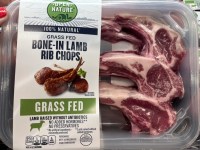
With Easter approaching, lamb meat is on the move in grocery stores. It’s always bumfuzzled me that lamb doesn’t get much love in the US where, for most consumers, it is a special occasion kind of meat, if that.

Today we explore why (1) lamb might be the most underrated protein, (2) there’s more than meats the eye to this so-called niche protein, and (3) the humans are fickle.

The backstory on lamb production in the US (it’s a doozy)

Per capita beef consumption in the US is 67 pounds. Per capita lamb consumption is ~1 pound.

In 2019, US domestic lamb sales were $433 million. Beef sales that year were ~$30 billion.

In 1884 there were 62 million people in the United States and 51 million sheep. Today there are 330 million people in the US and 6 million sheep.

What drove the sheep population off a cliff? Here’s a quick synopsis from an article that’s worth the read:

Americans are among the world’s top consumers of beef, pork, and poultry and near the bottom when it comes to sheep. In 2020, according to the US Department of Agriculture Economic Research Service, on average Americans consumed less than one pound of lamb or mutton per capita. Why does lamb make only seasonal appearances on the American table? Why do Americans prefer other meats to lamb? And why, in a famously dynamic country, has this preference lasted for hundreds of years?

The Spanish conquistadors brought the first sheep to North America in the 16th century, when they arrived in present-day New Mexico. In the early 17th century, English, Dutch, and Swedish settlers brought sheep to the East Coast and from there brought sheep elsewhere in North America. Sheep met the settlers’ immediate needs for wool to weave into fabric for cold-weather wear, as well as for meat. Sheep were eaten seasonally in the spring and summer on the farms where they were raised. Beyond that there was little or no market for mutton in the United States.

In the early 19th century, sheep farming developed into a larger industry because of an increased demand for wool in both national and international markets. By 1830 the wool-manufacturing industry occupied an important place in the American economy. This resulted in increased meat output, as sheep were slaughtered at the end of their wool-producing years. At that time, the meat industry was locally concentrated: Farmers sold the animals to nearby butcher shops. For many more years, however, meat was a secondary product to wool.

From the 1860s on, as the nation industrialized, urbanized, and grew wealthier amid a wave of European immigration, demand for mutton rose.

Sheep meat markets developed in major cities such as Boston, Philadelphia, and New York. Mutton and lamb, more expensive than other meats, were more appealing to the upper classes, so for much of the 19th century, sheep meat was a rich person’s meal.

In the 1880s and 1890s, young lamb meat gained some popularity as a festive food among the upper classes. An industry, known as a “hothouse,” developed on the East Coast and in the Midwest for young lambs, which reached the market by Christmas. Most were slaughtered by early spring. It was a prosperous business that remained seasonal.

Greater production reduced some costs and lowered prices, making sheep meat more affordable for low-income households. But beef and pork production also increased, and those meats became cheaper, too. Beef sold the best. The large meatpackers that had come to dominate the industry after the development of refrigerated railcars focused on beef cattle.

Lamb and mutton’s cachet among the wealthy didn’t last long. Americans came to see mutton as an inferior substitute for beef and pork — you ate it only when there was nothing better available.

And then the nails in the coffin, WW1 and WW2.

During the First World War, an “eat no meat” campaign in 1917 discouraged eating sheep that were needed for wool. The mature sheep slaughtered during wartime meat shortages didn’t help sheep’s reputation — they had a strong flavor and a tough texture.

Americans’ aversion to lamb and mutton persisted. A century later, lamb remains an acquired taste in America, making only seasonal appearances at Easter and Christmas.”

Here’s what Twitter had to say about the anti-mutton movement after WW2:

This lines up with a fantastic Bloomberg back story as well:

“Lamb has been saddled with a bad rap in the U.S. ever since World War II, when returning servicemen wanted nothing to do with it after years of canned mutton. “We’re still a niche protein when compared to beef, pork or chicken,” said Anders Hemphill, vice president of marketing at Superior Farms based in Sacramento, California. Typically, he said, “Americans eat 60 pounds of beef, 100 pounds of chicken, 50 pounds of pork—and 1.1 pounds of lamb.”

So Americans just don’t like lamb anymore? False.

From the same Bloomberg article:

But that number has been steadily rising in recent years—up from a low of 0.6 pounds per person in 2011, he said. “The pandemic has caused that number to bump up more,” Hemphill said. So why the lockdown renaissance? Adventurous millennial eaters and home chefs willing and able to spend more time cooking have fueled a good portion of retail demand.

But there’s another factor that’s been boosting lamb’s popularity in recent years—growing demand among first-generation Americans from the Middle East and southern Europe, where lamb is closer to a staple.

The rise of several Mediterranean fast casual restaurants has also helped fuel demand. As Covid-19 increased retail sales last summer, Superior Farms invested millions of dollars to get facilities ramped up to meet the retail demand, Hemphill said. One lesson learned from the pandemic, he explained, is that survival is “about being nimble and able to adapt quickly.”

“Unless we [U.S. producers] start farming lamb in additional areas, I don’t know how it keeps up with growing demand over the next 10-20 years,” said Smith.

Ok, so rising demand in the US without a clear path to satisfying that demand domestically? Interesting.

Especially since Australia’s lamb industry has an export super power. Some of that is live export to the Middle East for Halal slaughter, but much of it is.

“The value of Australian sheep meat exports is forecast to reach $4.4 billion in 2021–22. This is being driven by strong sheep meat exports to the United States. Between July and November 2021, exports to the United States were 45% higher than the same time in 2020. In the United States, meat prices have been rising faster than general price inflation and domestic sheep meat production has been relatively low. These two factors have been driving up the value of Australia’s sheep meat exports to the country.

China and the United States are Australia’s largest sheep meat export markets, in which we compete with New Zealand. New Zealand is the largest exporter of sheep meat to China and the second largest exporter of sheep meat to the United States.”

Set the above context next to the fact that 60% of fresh lamb sold in the US is imported.

This raises two questions:

  1. Could lamb be an every day protein instead of a special occasion protein once again in the US?
  2. If there is so much growing demand in the US, why is the invisible hand not doing its job and increasing domestic production?

I don’t have answers to those questions, but one thing is for sure…

People are fickle.

We humans tend to like what other humans like. We like what other humans in our sub-cultures like. We like what we know.

But if it's true that pendulums swing (and it is), I wonder when the pendulum will swing back to an increased popularity of lamb in the US.

What if lamb is the cinderella of the American meat case?

Sheep grazing in New Zealand…so cool, right?!

I say this quietly, but…livestock producers are also fickle.

I grew up hearing macho cowboys hate on sheep. The sheep growers vs cattle growers battles of the western United States are legend and the attitude has lived on in a lot of geographies. (Absurd, but legend. If you want some weird American history, here’s the history of the “sheep wars” from 1870 – 1920.)

Yet there is growing evidence that grazing sheep and cattle either together or sequentially, can be a way to maximize grass utilization since sheep will eat what cattle will not. If graziers’ objective is to maximize value creation from grass, and grazing sheep in addition to cattle is one way to do that, why hasn’t the US seen more of this….particularly given the challenging cow-calf economics of the last few years?

I’m guessing the answer to that question is as rooted in culture as the reasons that the US eats <1 lb of lamb per capita while Mongolia eats 88+ lbs.

We clearly just scratched the surface about lamb, but there are a lot of threads to pull about the role of the sheep industry. Especially as you look around the world where different output carries different value:

  • Lamb 😋
  • Mutton 🤢
  • Live export animals for local Halal slaughter (oh hey Australia)
  • Wool
  • And perhaps most importantly because Manchego is my spirit cheese…milk. (Interestingly there are <200 sheep dairies in the US, all tiny, because that is a suuuper tough business to be in.)

Name another animal with that much built in diversification of revenue streams!

Though, of course, most producers select breeds that optimize whether the primary output is meat or wool. And we haven’t even touched on the wool industry yet, which is a minuscule ~$40M industry in the United States. But that’s not surprising in a historical context either: “The demand for wool has declined since the mid-1940s with the advent of synthetic fibers.”

All that to say, Happy Easter and what a time to be alive 😃


Bonus: Was the herd dog the OG innovation in sheep production?

Categories
D2C Meat

Prime Future 60: Tighten the packer feedback loop

In early 2020 I went down the rabbit hole of exploring what D2C might mean for the meat business. Today I want to revisit some ideas from way back then but with the benefit of a little hindsight after the trend wildly accelerated during the pandemic. This tweet sets the directional stage for the obviousness that D2C is, and will continue to be, a thing for all segments, including meat:

So here’s the quick recap of my no longer provocative hypothesis:

Hypothesis: Direct to Consumer (D2C) business models will be a high growth sales channel for all meat & poultry companies within 5 years.

And to capitalize on the D2C trend, packers must get serious about building capability…soon.

For those who might say this market is still too small for packers to pay attention yet, remember in part 1 we talked about the Innovator’s Dilemma. Quick summary:

“Established companies see the early trends of new markets, they are just not structured or incentivized to act on them. Leaders at established companies must focus on market share and profitability of today’s largest customers & segments….not tomorrow’s.”

Given that D2C is definitively not going to suddenly be the largest sales segment overnight, why should packers focus there?

There are 2 obvious reasons:

  1. If COVID has taught us anything, its that a large segment of consumers are comfortable ordering online and want more ways to secure access to protein.
  2. As more companies seek to build brands and move closer to the consumer in order to increase margin, D2C presents an obvious opportunity.

Now let’s transition to the still relevant & under-appreciated elements around D2C, starting with this:

There’s a less obvious reason for packers to bet on D2C, one that could impact the packer’s ability to serve their entire customer portfolio.

The strategic reason to engage in D2C is to drastically increase visibility into consumer behavior.

To illustrate this point, here’s a case study from the insurance industry.

Back in the day insurance carriers built out the agent distribution system, so products and processes were built for selling through the distribution system. The carriers receive data related to policies sold. Now, many carriers are trying to figure out how to layer digital into the customer experience but its….clunky.

Contrast this with Lemonade, the homeowners insurance startup with a digital first experience for buyers that’s grown from $0 to $100M revenue in 3 years. As a digital first experience, shoppers not only buy their policy online, they also file claims online, most of which are settled with incredible speed.

So what? In its few years in existence, Lemonade has captured data about buyer behavior that provides them better insight to their buyer than the mega companies who have been in existence for decades.

Take <insert 100+ yr old insurance company>. That company captures data about buyers who purchased a policy. That’s it.

Meanwhile Lemonade is able to understand exactly how buyers moved through every inch of the buying process, such as:

  1. What options did they consider? Did they select one before going back to select another?
  2. Which options did the buyer take the most time to select?
  3. How far did the buyer get in the process before dropping out entirely?

And that’s just the tip of the iceberg.

This treasure trove of data informs Lemonade’s understanding of their target customer including buying behavior, which then informs Lemonade’s ability to improve the customer experience through better processes AND better products. The power of a shortened feedback loop.

Now let’s do the meat industry. Packers get point of sale data from retailers that tells them what a customer bought…that’s it. Meanwhile <name your digital first D2C company> understands the buyer’s behavior at a granular level, including which cuts a customer almost bought but didn’t, which cuts a customer bought once but never repeated, etc, etc, etc.

Think about how a packer could build a compelling competitive advantage in terms of marketing and product development not just in their D2C channel, but across retail and foodservice as well. Unlocking the power of a shortened feedback loop could power innovation and growth across the entire customer portfolio.

The packers are now dabbling with their 2 primary options:

  1. Supply a growing D2C platform as a customer
  2. Build their own D2C platform

Packers are approaching this opportunity differently, but it doesn’t take a crystal ball to see that this trend is here to stay.

My curiosity is not in how packers continue engaging this sales channel, but how the sales channel will impact their broader business via shortened feedback loops…and how might those impacts flow upstream to producers.

Here’s the original 3 part series on D2C & what it could mean for packers and producers:

  1. A D2C revolution is on its way
  2. The real reason packers should go all in on D2C
  3. Capturing the D2C Market: Farmers vs Packers

I’m interested in all things technology, innovation, and every element of the animal protein value chain. I grew up on a farm in Arizona, spent my early career with Elanco, Cargill, & McDonald’s before moving into the world of early stage startups.

I’m currently on the Merck Animal Health Ventures team. Prime Future is where I learn out loud. It represents my personal views only, which are subject to change…’strong convictions, loosely held’.

Thanks for being here,

Janette Barnard


Categories
Business Model Innovation Meat

Prime Future 57: The packers get Standard Oil’d. Then what?

This is neither political commentary or prediction. This is a look at the hypothetical implications of a hypothetical scenario that has a zero percent chance of happening.


If an oligopoly market is when 4 firms have 50+ percent share, then US beef, pork, and poultry are undeniable oligopolies. These concentrated markets aren’t uncommon though, we run into them from cereal (Kellogg’s, General Mills, Post, and Quaker) to cell phones (Apple, Samsung, Huawei).

But these examples are child’s play compared to the most extreme example of market power: the classic story of Standard Oil. In the 1880’s, John D. Rockefeller realized the oil business was a fantastic business except for the nagging issue of price volatility. So he found a solution to that little problem, by developing an effective monopoly through the Standard Oil trust. A Supreme Court ruling in 1911 forced the trust to split into 34 companies to increase market competition.

The current rally cry of many US producers is that the problem with the cattle business is concentration among the packers. This is not new; tale as old as time. But carry that rally cry out to the most extreme outcome of de-concentrating processing capacity….what does it really solve?

Just for fun, let’s say the DOJ goes full 1911 and ‘Standard Oils’ the meat industry.

Every plant becomes its own company.

The ‘Big 4’ become the ‘Midsize 22’.

Then what? Before we lock into any hypotheses about a re-fragmented meat industry, what was the result of busting the Standard Oil trust?

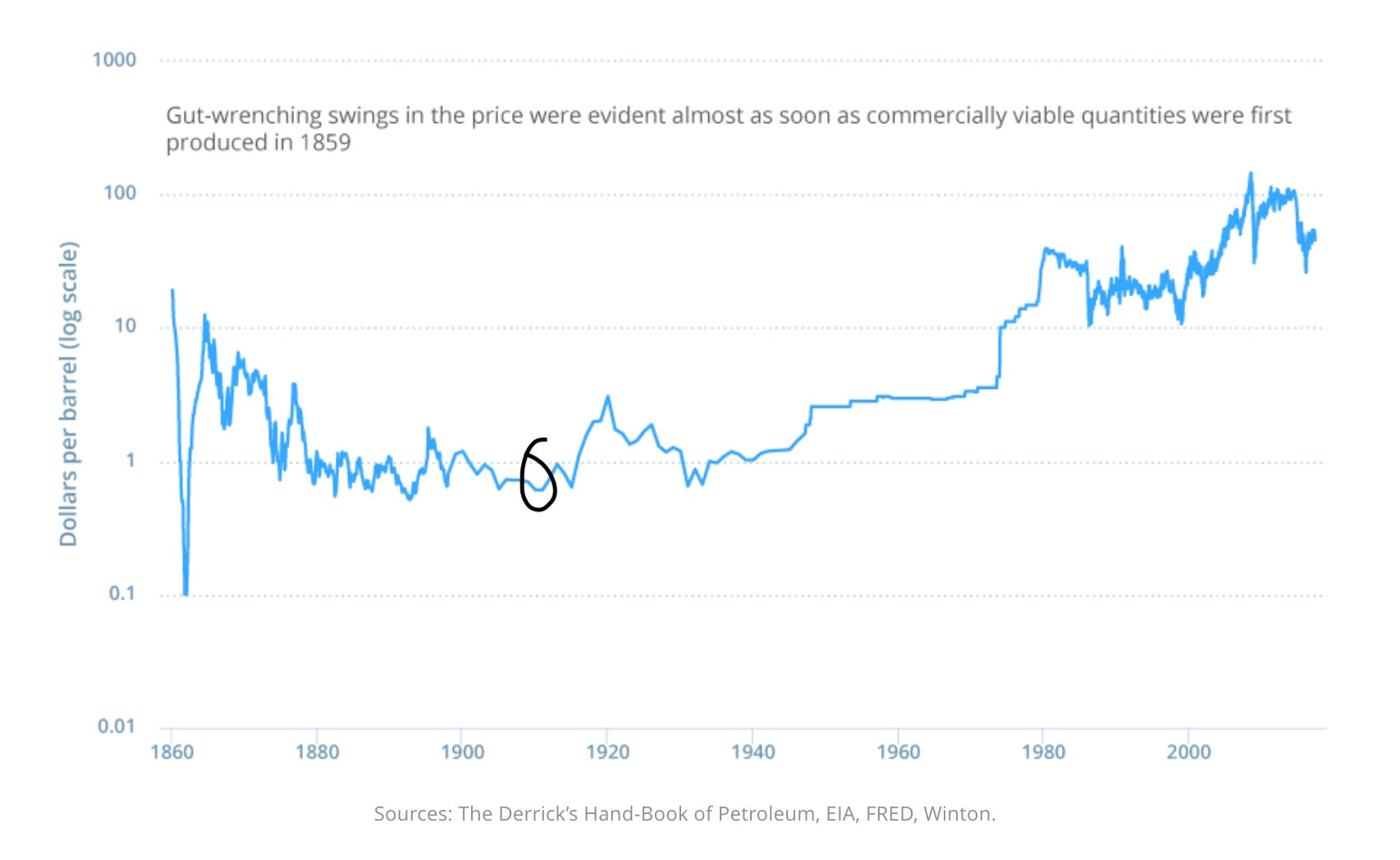
Keep in mind that also around 1911 the rise in automobiles meant gasoline (previously a worthless byproduct) was suddenly worth more than kerosene, and that other regions of the world began producing oil competitively so the entire oil market was shifting as Standard Oil was split. Here’s a snapshot of oil prices before and after:

So the Standard Oil trust was busted and then prices went…up? While there are clearly more factors at play than we’ll dig into here, my takeaway from this chart is that this whole scenario is not as straight forward as anyone would like it to be. There are a lot of factors at play; markets are dynamic and impacted by all the things from pandemics to stimulus programs to weather.

The livestock & meat industry’s common hypothesis is that if the packers were less concentrated, then market power would ‘return’ to feedyards & producers upstream and downstream customers in foodservice/retail. It would ‘free up margin’ by taking away the packer’s pricing power on the buy and sell side. Econ 101.

But is reality as clean as an econ textbook? Are we *certain* that the net effect of increasing packer competition would definitively be positive for the rest of the value chain?

The 2 dimensions I’m interested in are price (purchasing live cattle, selling boxed beef) and innovation (finding new ways to better serve customers & end consumers).

Let’s start with downstream. What would the implications be for further processors, retailers, foodservice, and end consumers?

Price: Packers sell to further processors, distributors, retail and foodservice…segments that also happen to be highly concentrated. Let’s say a national retailer like Walmart who sells ~20% of US retail beef today buys from 1 or 2 companies. Each supplier has multiple plants that service multiple Walmart distribution centers with multiple SKU’s at tailored specs. Plants have become specialized with specific programs or specific customers. The big processors were able to flex reasonably well as COVID shut down foodservice because of diversification of channels across plants – individual plants didn’t have that diversification.

In a Standard Oil trust busted world, is a national retailer now going to work with 10 independent plants that are each independent suppliers? What does that do the retailers ability to keep meat cases full with homogenous supply of fresh meat at spec? Big companies like to deal with big companies that can handle big business. What does that increased friction in the whole process do to the price of meat at retail? On the other hand, what would increased competition among packers do to the price of meat for retailers?

Innovation: A key rationale for minimizing oligopoly or monopoly markets is that competition leads to innovation. Agree, of course. But you know what else leads to innovation? Resources. What is the optimal mix of incentive to innovate and resources to innovate as a function of market power? I don’t know. But low margin businesses without scale don’t tend to be fountains of innovation.

Innovation = Incentive + Resources

Then let’s look upstream. What would the implications be for cow-calf producers and feedyards?

  • Price: Cow-calf producers don’t sell to packers, they sell to sale barns or stockers or feedyards. The feed yard space is way less concentrated than processing but way more concentrated than cow-calf. Say feedyards have more pricing power if packers are split up….does that trickle up to cow-calf producers or does it just mean feedyards are the new margin sinkhole of the beef supply chain?
  • Innovation: Let’s say more of the total value chain margin stays upstream. Maybe that leaves some financial wiggle room to focus on things besides survival So do producers start thinking about things consumers are talking about like carbon footprint? I don’t think so. Not unless the incentive structure changes and packers pay more to feedyards who pay more for calves that are raised a certain way at the cow-calf operation.

A complicating factor is that even if you increase processing competition nationally, it does not necessarily mean you increase competition regionally.

And if packers cannot consolidate processing capacity, would the result be more vertical integration in an attempt to consolidate supply chain control?

An obvious factor that makes meat processing different from cereal is that it’s a capital intensive business so barriers to entry are high, really high. It’s an economies of scale business, so it’s a business that ‘wants’ to be consolidated to chase more economies of scale.

But even if the US government regulated away processor’s ability to consolidate, what would that mean for the US industry’s ability to compete against emerging regions? The world’s largest hog farm was recently built in China for 84,000 sows to produce 2.1 million hogs annually….wouldn’t it stand to reason that the world’s largest processing plant(s) will soon follow?

Would a Standard Oil’ing of meat packing be good for downstream players? Maybe, in the short run. Probably not in the long run.

Would a Standard Oil’ing of meat packing be good for upstream players? Maybe, in the short run.

But what’s not good for downstream players in the long run cannot be good for upstream players in the long run.

Hear me loud & clear that profitability at all stages of the value chain is the #1 foundation of a viable cattle industry. Increasing margin capture throughout the value chain is a good thing, a great thing. But is reducing packer power the panacea that people often describe it as? I may be wrong, but I just don’t think it is.

Maybe looking at impact of competition on pricing power & innovation is the wrong framework….maybe higher margins don’t lead to innovation, maybe innovation leads to higher margins.

Are oligopolies good or bad? Should the big 4 be broken up? Irrelevant questions.

The actionable question is, how do you win when you buy from or sell to an oligopoly marketplace? Control the control-ables and innovate the innovate-able.

At the end of the day, animal protein is a commodity driven business. And what do commodity markets do? They move in cycles. Sometimes tree growers profit, sometimes lumber mills profit. Sometimes the cow-calf producer wins, sometimes the packer wins. Sometimes dairy producers make hand over fist, sometimes processors do. Sometimes oil drillers print money, sometimes refineries do.

‘your margin is our opportunity’

Look at other industries where big companies in one segment of a value chain amassed market share and then stopped innovating. Think IBM in the 80’s. You know what happened when those companies got satisfied with their market share and stopped innovating? Apple. Microsoft. Dell. A resurgence of insurgents jumped in with new innovation that captured market share…and then those ‘new’ tech companies get big and face their own anti-trust scrutiny. It’s almost like everything is a cycle and the cycle is what creates opportunity…

You could easily argue that type of insurgency is what upstarts like Cooks Venture or Shenandoah Valley Organic could be in the US poultry business.

Carl Lippert recently summed this up well in his article The Farm Barbell,

“The future of agriculture is large farms producing commodities and small farms creating value added products.”

That’s true for producers AND for processors.

The only way to stay in a commodity driven business AND get out of the trappings of commodity cycles is to build a competitive moat, to pursue value added markets. That’s also true for producers AND for processors. We’ve talked about this before:

The livestock & poultry industry has spent decades driving cost out of animal production systems to increase profit. And we’ve done it well. Really well. More pounds per animal. Less feed per pound of gain. Least cost feed formulation. Increased efficiency.

And yet, we see record high number of farm bankruptcies, near record low farm income, and volatile train wrecks of milk, live cattle and hog markets the last 6 months. All of which point to revenue challenges in animal agriculture.

Commodity production is an existence governed by a ruthlessly brutal dictator: The Market. It’s time to focus on enabling livestock producers to increase Revenue, to escape the commodity game that’s ruled the industry, to differentiate.

The punchline of Lippert’s article sums up the implications of this whole discussion for startups in animal ag:

“Startups should build penny shaving machines for scaled farms and margin capture machines for small farms.”

Yes.

(For more on the Standard Oil saga, I highly recommend the book Titan by Ron Chernow.)


Livestock Market Transparency is Possible. Here’s how. (link)

On a related note, this piece was written at the height of 2020’s chaos:

Pricing is a hot topic in light of live cattle and boxed beef prices heading in opposite directions, and the same dynamic to a lesser extreme in pork. These pandemic market dynamics highlight the need for improved price discovery and market transparency across the entire meat, poultry, and livestock sector. These are great problems for technology to solve. Here’s why: (link)


Prime Future is a weekly newsletter that allows me to learn out loud. I’m on the Merck Animal Health Ventures team. Prime Future represents my personal views only.