Categories
Emerging Tech Funding Venture Capital

Prime Future 137: It’s time to call it, farm mgmt software was a wash.

Riddle me this: What do you call a category of companies that raised a ton of venture capital and, a decade later, had not one sustainable business to show for it?

There are a few categories that are in the process of playing out as we speak, including plant-based meat, cell-based meat, and indoor farming. But each of those is still too early to call for sure, they are still playing out. Maybe they’ll fit the above description when the chapter closes, or maybe they’ll be raging successes. TBD.

But there’s another category that is 10+ years old, and a post-mortem is timely because, well, it’s basically commercially corpse-like.

The category is farm management software, the row crop genre.

Most would call farm management software companies Agtech 1.0. It was the wave that initially put agtech on the map, kicked off by Monsanto’s billion-dollar acquisition of Climate Corp in 2013.

Most companies in this category were started between 2005 and 2010. There were a bunch of these early companies that didn’t make it beyond Series A, sometimes attributed to the fact that they didn’t understand farmers or they didn’t get that not all farms operate the same or that a farmer growing corn & soy in Illinois is not the same as a diversified farm in Missouri is not the same as a vegetable farmer in Yuma, Arizona. But let’s ignore the majority of companies here.

Using back-of-the-envelope math on only the handful of companies that broke through and made it to an IPO or major acquisition, the final players alone raised over $400 million in venture capital.

And their acquirers (and in one case, public market investors) paid close to $2 billion in total, plus or minus $200 million.

So where are they now?

In general, they are running on fumes, are afterthoughts within their organizations, or have been divested entirely.

$400+ million in venture capital, ~$2 billion in acquisitions, and the row crop farm management category has not one sustainable business to show for it.

The major crop input companies acquired these farm management companies to jumpstart their own digital capabilities. By all accounts, these software products were intended to be functional, sustainable profit centers – able to stand on their own two feet like a real grown-up business.

For the most part, the idea behind the acquisition was to turn the data from farm management software into higher-value products like analytics or insurance (Climate Corp’s original thesis). But if the data isn’t good (clean), then the analytics are worthless. So then the common path was to downgrade the push for revenue to instead use free access to software as an incentive to switch to that company’s seed and chem products from their core portfolio.

I wonder if part of the issue was that farmers had been trained to expect access to farm management software at low to no cost by venture-subsidized businesses that were in all-out pursuit of growth.

The corollary is how Uber & Lyft used to be cheaper than a taxi, by far. Being cheaper and more convenient made it a no-brainer. Then Uber & Lyft went public and now what used to be a $15 ride is a $30 ride because it’s not venture subsidized and these companies have to stand on their own two feet. But that new (real) price for a rideshare is close to what a taxi costs and, especially at an airport,  it can be easier to grab a taxi than hunt for your Uber driver, the needle in a carstack. All of which changes the long term market for rideshare…just like farm mgmt software?

My hypothesis is that founders of Agtech 1.0 companies, and investors, had the hypothesis that farm management was a winner-take-all market. If you believe that only 1 or 2 players will dominate a market, then it is logical to invest aggressively in growth in order to be one of those winners.

But few markets are really winner-take-all.

In an industry such as farming where the potential user base is so diverse, their needs are so diverse, their business structure and profit margins are so diverse…the pie is so varied that it would be difficult for any one company to take the entire market, simply from a capability standpoint.

Perhaps the question that the agtech world should be asking itself, a decade+ in, is how to measure the success of a venture category. There are a few ways you could think about it:

  1. How much venture capital was raised? Everyone knows this isn’t a long term measure of value, but it does indicate something. Or sometimes it indicates something. But let’s agree it’s an insufficient metric at best and a vanity metric at worst.
  2. How many exits did the category have / how healthy were those exits? This is a much better indicator than #1, and it is certainly an indicator of success for founders and investors. But it’s like calling the game-winner at halftime.
  3. How commercially viable is the business over the long run? This is the only measure I know that reflects commercial reality; how much value is created for farmer customers and captured by the acquirers. Unless the test of time and commercial value is passed, then it was all just financial engineering and/or short term wins.
If we agree that #3 is the real measure, and after a decade of post-acquisition signals from the category, I think we have enough data points to say that in the end, this category was…a wash.

The caveat is that there are some niche examples of variations on farm management software where the above does not apply, often where the company has dialed in on a value proposition that is not simply storing & visualizing basic farm data but building higher value propositions. And some of those companies were not juiced in a big way by venture capital, they tended to grow more slowly over time. But overall, TBD on these.

So, what do we learn from agtech 1.0?

About pricing new products, and how people don’t tend to value what they don’t pay for.

About user experience and automating data entry.

About value creation….and that there has to be enough of it!

About how digital products matter strategically for incumbents, and that checking a box is not a strategy.

I also think there are lessons about aligning financing and business expectations with long-term customer interests. Agtech 1.0 created the opportunity, or revealed the opportunity, for sector-focused investors to have an edge over generalist VC’s simply by understanding the business of agriculture and its nuances.

While it’s time to call Agtech 1.0 a wash, I don’t think we can call it a bust.

It attracted capital and talent to a previously overlooked space. And even though you can’t point to individual significant long-term successes in this category, we can safely assume the learnings that founders, investors, strategics, and farmers had through this process has informed how Agtech 2.0, 3.0, 4.0…25.0 will play out.

How would you rate Agtech 1.0?

Oh and the whole thing of not knowing exactly how things will play out, isn’t that really a feature of creating and building the new, not a bug?

What a time to be alive 😉


Did you miss early editions of Prime Future?

Access an ebook with editions 1 through 81 here: Prime Future PDF

Get the ebook!

Categories
Animal AgTech Animal Health Funding

Venture Investing in Animal Health

“If we can’t get to a strong ROI for the producer very quickly, it’s an easy pass for us.”

?? a nugget that the partners from Fulcrum Global Capital, a global food & ag venture capital firm, shared in a conversation on venture investing in animal health including:

  • The key areas of opportunity in animal health, across both biotech and digital, and from an outcome based perspective – not just raw efficiency. (Go to the 5 minute mark in the YouTube link below.)
  • How Fulcrum works with their investor base of actual producers, a non-traditional approach compared with most venture funds backed by institutional capital. (12 minute mark)
  • The benefit to producers of investing in a venture fund. I’m intrigued by the idea of giving producers an opportunity to invest in their area of expertise and generate venture returns while giving them access to solutions that address operational problems, potentially creating even larger returns from an operational standpoint. (19 minute mark)
  • When is venture capital the right tool to scale a startup. “Venture is good when you have a founder that has aligned beliefs with venture capital – disruptive tech, scale quickly, exit within a specific time frame. We’re looking for solutions to billion dollar problems across global agriculture.” (27 minute mark)
  • The exit market is being defined as we speak. One of the challenges with animal health, especially drugs and vaccines, is sometimes those are long runways that don’t match up with venture timelines. Understanding how those pieces fit together (runways, exit paths, multiples, etc) will start to define what levels of risk capital will be available to founders and help investors understand what parts of animal health will be venture backable.”

This conversation has relevant gems for producers, entrepreneurs, and strategics. Check it out here (link) and subscribe to the Prime Future YouTube channel while you’re there.

Processing…
Success! You're on the list.
Categories
Animal AgTech D2C Funding

Can grass fed beef scale in the USA? ButcherBox CEO & founder, Mike Salguero, paints a vision for it.


I am thrilled to share a conversation with Mike Salguero, founder & CEO of ButcherBox. If you’ve read Prime Future for more than a minute, you know I’m bullish on business models that leverage tech and reorganize supply chains in ways that create more value for producers (on one end) and consumers (the other end).

Enter ButcherBox.

ButcherBox was started in 2015 to “ship meat in the mail” with a focus on meat with claims that vary by protein. In the beef category, the company intended to sell grass fed beef which meant sourcing from Australia/New Zealand. But as their business matures, ButcherBox is looking to source grass fed beef in the US…a segment that does not currently exist at scale. There are several oft quoted “reasons this won’t work” that have to be eliminated in order for the US to develop a robust grass fed segment from genetics to pasture management to processing. It will take creativity, technology, incentive alignment, and a lot of time in front of the white board to figure out grass fed beef in the US but where there’s a market, there’s a way.

Mike is a tech entrepreneur turned meat industry believer who is building a brand for the long haul, as in 100-year-time-horizon. This is all the more interesting given Mike’s surprise when he started exploring the meat category that there (really) are no brands in meat, especially as retailers have dialed up private label offerings. But one segment’s miss is another segment’s opportunity, and here we are seeing how business model innovation can create value. Delicious.

I hope you enjoy Mike’s insights as much as I did. A few time points in time to highlight:

  • 7:30 minutes – Why the only early outside capital into ButcherBox was via a Kickstarter campaign, instead of the traditional venture capital model.
  • 14 minutes – Mike talks about some of the messy early challenges of getting ButcherBox off the ground.
  • 24 minutes – The 2 reasons ButcherBox customers are customers? Mike says its split between convenience (easy order, get a box the next day) and access (to meat with specific claims).
  • 31 minutes – Mike talks about the future of ButcherBox which has implications for retail (how consumers purchase meat) and livestock/meat value chain as they look at how to source grass fed beef, at scale, in the US.

Processing…
Success! You're on the list.

Categories
Animal AgTech Funding

If Impossible Foods outsmarts the meat industry, its for this reason.

“We are going to replace animals in the food system by 2035,” said Pat Brown, founder and CEO of Impossible Foods, in late August 2019.

According to a Harvard Business School case study on plant-based meat alternatives:

“In 2016, after $80 million in research and development, Impossible Foods launched its first product: a plant-based imitation of ground beef that, compared to the real thing, generated about 89% less greenhouse gas emissions, and required 74% less water and 95% less land.

After leaving his full-time role at Stanford in 2011, Brown raised $3 million from venture capital firm Khosla Ventures to fund the hiring of a small team of researchers. Their goal was to develop a plant-based product that could be prepared, cooked, and consumed just like ground beef – and, most importantly, be so similar to the real thing that beef lovers would not know the difference; switching would not require compromise.

Unlike many plant-based products already on the market, the product would be specifically geared towards meat eaters, not vegans and vegetarians. It would compete with beef by appealing primarily to mouths and stomachs, not exclusively hearts and minds. ‘Educating and shaming and persuading is not how you get people to change diets,’ said Brown. ‘People who love meat are going to keep wanting it, so the way to eliminate the industry is to develop meat from plants that tastes better than meat from animals.’”

Brown’s strategy to replace animal protein by focusing on taste is brilliant. That strategy sparked a movement that has forced the meat industry to respond.

Multiple brands have launched hybrid products, like Perdue Farms’ popular chicken and cauliflower nuggets, and its ‘chicken-plus’ product range made in collaboration with Sacramento startup, The Better Meat Co. And Tyson, Cargill, and other processors have invested in plant and cell-based meat startups, which shows that they are hedging their business, just in case Pat Brown succeeds and alternative meats grow market share in a big way.

These are smart moves; they’re also reactive moves.

And it’s time for the meat and poultry industry to get proactive.

Brown tapped into the pipeline of venture capital to fund his company’s research and development work, but the market cap of the top 10 meat companies is over $100 billion combined. That market cap becomes even bigger when you add in the big players of adjacent spaces with a vested interest in the future of animal production, such as animal health and animal nutrition. Don’t tell me these companies can’t throw down the gauntlet to generate big innovation.

The capital exists to incentivize game-changing innovation in animal protein. Does the will?

My favorite ‘innovate the core product’ example is ultrafiltered dairy-based drink Fairlife Milk, a breakthrough product in the epitome of a commodity space, and now a growth brand for one of the largest beverage companies in the world. Owned by Coca-Cola, Fairlife didn’t just break through the milk category; they broke through in the broader beverage category.?

Another case study is the ‘discovery’ of the flat iron steak. According to The Hustle:

“In 1998, the [US] National Cattlemen’s Beef Association — the industry’ largest trade group — gave a pair of meat scientists $1.5 million in grant money and a seemingly impossible mandate: Find a new cut of meat that centuries of professional butchers had missed. Three years later, the world was introduced to the flat iron steak.”

The takeaway? Aligning resources and incentives around clear objectives delivers results.

The flat iron example brings up another potential capital source to drive protein innovation: Checkoff dollars. These dollars must be invested in programs to increase consumer demand, and to create opportunities to enhance producer profitability. Maintaining relevance and the future of the industry seems directly linked to increasing consumer demand and creating opportunities to enhance producer profitability…wouldn’t ya say?

There simply must be a way to triple down and innovate our way into a secure future for animal protein. Some questions to consider:

  • Why does animal ag keep tweaking around the edges of innovation and consumer education, instead of waging an all-out war to prove definitively the relevance and importance of animal protein to consumers, rural economies, and ecosystems?
  • Where’s the $1 billion research and development investment to innovate meat and poultry from within? To address consumer concerns about sustainability, transparency, animal well-being, and so on?
  • What would happen if meat companies created venture studios to find solutions that reduce greenhouse gas emissions in beef production by 80%?
  • What would happen if Tyson, Cargill, Perdue Farms, Pilgrim’s Pride, et al allocated venture dollars to innovation that aligns the way meat is produced, processed, and sold with changing consumer preferences?
  • What would happen if every checkoff program identified key objectives — such as improving or demonstrating animal wellbeing, or finding feed additives that maintain animal health and performance with 75% less antibiotic use — and created grants or low-interest loans to fund the work?

And perhaps most poignantly, what would happen if the meat & poultry industry took a page right out of Pat Brown’s playbook and decided to innovate their way to consumer’s wallets?

My bet is that it would pay off in a big way for processors, producers, and consumers.

Processing…
Success! You're on the list.
Categories
Animal AgTech Funding

The Investor’s Guide to Animal Protein…I need your help!

“We don’t see many options.” 

“It’s not relevant, it doesn’t move the right needle.”

These are 2 common themes about technology solutions that I hear when talking with big players in animal ag production that would be customers, the strategics that would be acquirers, and the angel & venture investors that would provide early capital to startups building solutions for livestock & poultry producers & processors. 

Let’s not beat a dead horse talking about these problems, my goal is to find solutions. And the best way I know to do that is by talking with smart people, testing some hypotheses, and sharing those learnings. 

In short, I’m writing an ebook and I need your help ?

I want this book to be chock full of relevant context and helpful perspective on animal ag for innovators & investors working in – or considering working in – this segment.

One way I plan to do this is by talking with 25 investors & 25 producers/processors. So here’s how you can help:

  1. If you are an investor in animal ag…
  2. If you are a producer/processor…
  3. If you know someone in one of the above categories that I should talk with ….

….and are game to have a quick chat about this space, or want to send someone my way, shoot me a message.

Oh, and you can pre-order the book here.

Ultimately the 2 big questions that the livestock & poultry sector will have to navigate to radically accelerate the pipelines of solutions are:

  1. How do we attract funding & innovators to tackle the real problems in animal ag?
  2. What’s the funding model that generates return for investors, for entrepreneurs, and most importantly creates real, measurable value for customers? 

My hypothesis is that it will take a non-traditional funding model to drive more innovation in animal ag…and I don’t know what that looks like, yet. That’s one of the questions I’m wrestling with through this process because I don’t think we’ll see any unicorns (privately held companies valued at $1B+) operating solely in animal ag. The industry structure doesn’t support that probability given industry concentration as well as margin structures.

If that’s right, the traditional venture capital model doesn’t fit animal agriculture. 

So we need an innovation model that leads to more great products that deliver high value for customers while generating returns for investors and entrepreneurs. A few dimensions that could drive a tweaked model:

  1. Reduce the amount of time to product-market fit by having startups closely aligned with prospective customers to get early and ongoing customer feedback. This should result in shortened sales cycles and faster adoption.
  2. Reducing the amount of early stage capital required to get to product-market fit. This is a function of #1.
  3. Reducing the amount of time a startup is independent, aka a path to acquisition in year 2-5 instead of year 10-12.

As always, it’s about finding a path where the rewards are commensurate with the risk. If the rewards are somewhere sub-unicorn, which traditional venture capital requires, then the risk profile has to also be lower.

Keep in mind that $741 million was invested into alternative proteins in the first quarter of 2020. The first quarter.

If animal ag intends to stay relevant to consumers, we need to tap into the existential urgency of solving the big problems and channel our collective inner RBG to bring allll the smart people along for the ride that we can find.

“Fight for the things that you care about, but do it in a way that will lead others to join you.” – RBG

Processing…
Success! You're on the list.

Categories
Funding

How to Bring Sexy Back to Animal Ag Innovation

Kerryann Kocher, Principal at Rock Road Consulting, recently presented this content to highlight the need for innovation in animal agriculture and ways the industry and entrepreneurs can foster adoption of new technologies. This is a summary of her presentation.

Rock Road Consulting has tracked a total of 166 startups with offerings across Animal Ag Tech. The companies range from Seed to Series B Funding and their target customer is the livestock producer. We’ve categorized this startups and the one question you ask when looking at the companies broken out by category is, are we innovating in the areas of greatest industry need?

The answer: NO.

Here are a few highlights from these 166 startups:

  • 6%  are improving Genetics/Breeding
  • 9% are working on Robotics
  • 2% are building solutions around the Environment

Entrepreneurs are solving for the wrong things, like digital or data. The biggest problems we need solved in animal agriculture are:

  1. Labor
  2. Transparency

What solution are you building to enable producers to use less labor or increase transparency through the supply chain? This is where we need entrepreneurial and engineer talent rallied.

So we attempted to look at what attracts meaningful innovation to an industry.  I would propose that with 19.8B in venture-backed food and ag tech, that animal ag tech is not getting their share.  Is it because animal agriculture is not as attractive as crops?

The answer: NO

Here are the proof points to back up that emphatic answer:

  1. Per capita consumption of animal protein in the U.S. set a new record in 2019. 
  2. According to the ERS, on a national basis the economic size of the crop sector and the animal sector are about equal as measured by the value of production by USDA and have been since 1990.
  3. Animal ag gets branded as being slow to adopt, perhaps due to the “closed systems” of livestock producers, making it difficult to know the needs to solve for. On the flipside the integration and specialization of the industry also creates fewer producers to reach….in comparison.
  4. For cattle, we’ve heard VC’s say they don’t see the market of producers running cattle as a business as a large enough market

So of these factors that attract innovation, Kocher contends that adoption is where to start.

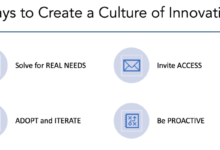
Which leads to her 4 key points about how the industry can improve technology adoption by creating a culture of innovation:

  1. Solve for real needs. This requires us as an industry to be clear on what those needs are…this is critical path to the future of protein.  This invites problem solvers to seek solutions for our industry vs, apply technology to our problems!  It also attracts new fresh talent to grow in our industry. 
  2. Invite Access. If you’re a producer or processor, create access points for entrepreneurs and problem solvers to feel, see, understand our challenges.  Culture is defined by behaviors. What if we are known as the most available, accessible, open and enthusiastic market for innovation….instead of slow adopters, a brand that does not attract entrepreneurial talent or venture capital to the space.
  3. Adopt and Iterate. Once we have provided access, allowed new comers into our farms and ranches, tried new theories and created space to do things different than they have always been done.  And then it FAILS…the defining behavior is what comes next.   Do we ITERATE…or do we penalize the proposed solution and give up. How do we remove the fear of failure and subsequent product adoption, but iterate to  mutual solution. 
  4. Be Proactive. If every organization in our industry said we will set aside 5 days a year to seek out and engage within innovation ecosystems, try new technology or just do something in a new way, we could start down the path of creating a create a culture of innovation .

Processing…
Success! You're on the list.

Categories
Funding

There’s a Meat Vacuum in AgTech; how do we fill it?

$16.9B in venture funding went to agtech companies in 2018. Sensors, robotics, machine learning, CRISPR, plant based <anything>, wearable tech for livestock, and so on. A ton of activity in row crops, a lot of activity in dairy, some interesting plays in livestock…but what about the meat sector? 

What about that massively critical phase from the time an animal leaves the farm (swine, poultry) or feedyard (cattle) until it shows up on the front step of a retailer, foodservice, or consumer. Where’s the venture backed innovation in that space?

Think of all that happens in that black hole from plant gate to table: 

  • Harvest
  • Carcass disassembly – there’s still many manual processes, complex decisions about how to disassemble the carcass most profitably
  • Selling meat – let’s not kid ourselves, price discovery could use a little upgrading as well as the processes around transactions of all sizes
  • Shipping a perishable product to customers likely to unpack, further process, repack, and ship again

All of this complexity while operating in a world where consumers increasingly expect transparency and sustainability.

The meat value chain is complex, it’s capital intensive, and it’s a bit of an innovation black hole with very few venture backed businesses working within the sector.

Processing…
Success! You're on the list.

So disruptors are coming from outside. And from the outside, it appears the best way to disrupt the meat business is to replace the most complicating factor about it: the animal. More than $2B dollars have been invested into plant based meats alone!

But why isn’t more venture capital being deployed to tackle the problems *within* the meat industry? To radical innovation that allows consumers to feel great about eating meat? To allow producers to feel good about their relationship with the rest of the value chain? To drive cost out of the system (something this industry knows how to do!) and expand industry relevance and revenue (something slices of the industry know how to do).

Is it because the market isn’t big enough? Negative.

Is it because the industry isn’t interested in innovation? If you can show ROI, companies will follow the money.

So what gives?

Here’s my hypothesis: the lack of venture backed startups solving problems in the meat industry is because the meat value chain is essentially a black box to those outside the industry. Within the industry, game-aware leaders know where the industry needs help. They know the big problems that need solving. And they need outside innovation but often don’t know where to go to get it, for a few reasons:

  1. Meat is a nuanced space. These aren’t widget factories. Even with improved genetics and refined feed rations, there’s variability in nature that must be reconciled in the processing plant. 
  2. The industry has exploded based on scale & cost efficiencies. Now the pendulum is swinging to other growth drivers: distribution, packaging, product, sustainability. 
  3. Limited incentive to disrupt from within as scale has been the path to market share and profitability, when commodity cycles cooperate. 

The upside of the venture capital subsidized plant meat venture backed ad frenzy is that meat is a relevant topic right now. More and more people – and entrepreneurs – are interested in the meat industry….but they don’t have first hand, up close experience with the problems that – if solved – could elevate the industry.

So what if….

What if there was a way to get the big players to bring identified unsolved problems to the table, and entrepreneurs to bring startup scrappiness and fresh views, and bridge the gap that’s prevented the meat industry from benefiting from the Agtech boom? 

This article isn’t a thought exercise, I’m looking for discussion 🙂  What do you think would drive more innovation around the meat industry? 

Processing…
Success! You're on the list.